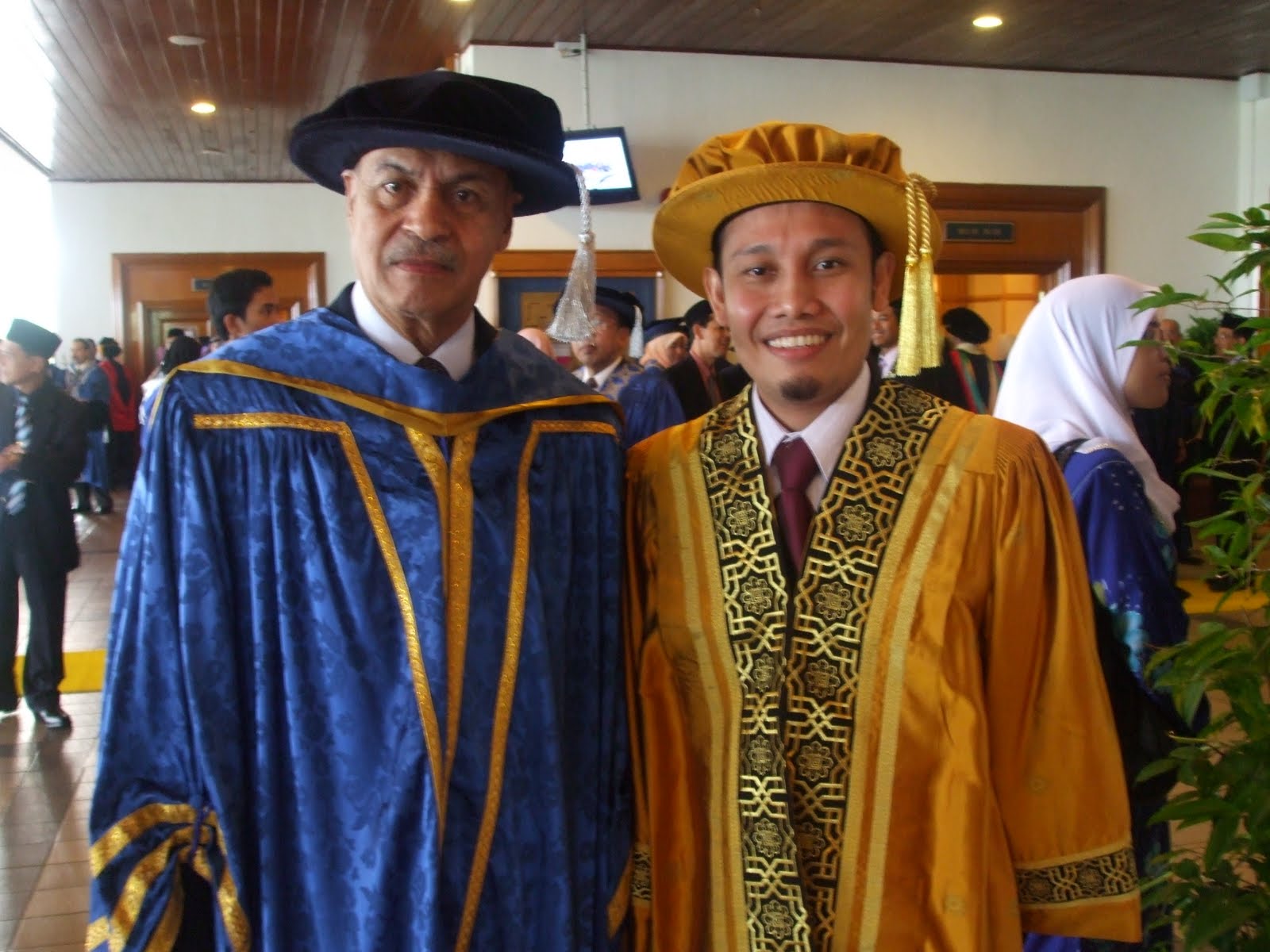
PENGALAMAN & KERJAYA

MUHAMAD FAZIL HJ.AHMAD

Idola: Nabi Muhammad S.A.W

islah_project@yahoo.com

3 Ogos 1979

Temerloh, Pahang

Calon PhD. Corporate Communication (UPM)

Ijazah Sarjana Komunikasi IIUM - M.A.HSc. (Comm. UIA)

Ijazah Sarjana Muda Perbandingan Agama dan Falsafah (UIA)

Ahli Jawatankuasa Projek FRGS B-F1 “Branding Index”

Manager Student Activities and Alumni Department.

Manager Graduate Affairs Department, Kolej Islam Antarabangsa Malaysia

Tim. Dekan Pusat Bahasa Komunikasi, Kolej Islam Antarabangsa Malaysia

Kordinator Fakultas Komunikasi, Universitas Islam Antarabangsa Jakarta

Pensyarah Kolej Islam Antarabangsa Malaysia

Pensyarah Technology Park Malaysia College

Penasihat, Kelab Debat dan Komunikasi Kolej Islam Antarabangsa Malaysia

Penasihat, IIC Alumni Association

Pengarah Istiadat Convokesyen 2008-2010, IIC

Penceramah Motivasi di Eastana Event & Consultancy

Penceramah Sesi Kesihatan Jemaah Haji Masjid Wilayah KL

Jurucakap Produk Kesihatan SayHeart Singapore

Ahli Kumpulan Nasyid All One

Calon bagi Anugerah Industri Muzik Ke-16 - All One

Calon bagi Anugerah Nasyeed.Com - All One

Research Projects

(1) FRGS Project (BF1) (2010 – 2011) – “Developing a new branding index in corporate communication for an Asian country” (Research Assistant)

(2) Ph.D Research (2009 -2012) – “Leveraging country reputation and nation brands index in bandar Melaka: Potential strategies for developing Malaysian’s city brand index”.

(3) Ph.D Project: “Measuring Determinent of City Brand for Institutionalizing Strategic Communication: A Study of Malacca City”


Publications and Conferences

(1) Fazil, A. (2006). “Communication Technology and Organizational Performance: An Analysis of The IIUM Community’s Web Sites Usage and Perceptions”. Research for Master Thesis IIUM Library. IIUM.

(2) Othman, I., Zakiah, M.& Fazil, A. (2010). “Halal Business Corporate Social Responsibility”. IUSRCE 2010, PWTC Kuala Lumpur.

(3) Fazil, A & Abdullah. Z (2011). "Measuring Determinants of City Brand: A Varification Approach in the Corporate Communication Perspective in Malacca City" MENTION 2011, UKM Bangi.


My Inspiration:

“The requirement of comprehensive excellence achievement is balancing of our life journey” -Fazil, 2009-

TEACHING SPECIALIZATION:

1) Public Relations
2) Corporate Communication
3) Advertising
4) Branding & Reputation
5) Crisis Communication
6) Public Opinion & Propaganda
7) Islamic Studies
8) Moral Studies
9) English Language


Convo UIA'08

Friday, June 1, 2012

The Dangers of Overestimation


Dear Muhamad,

I read an article recently that says that people tend to seriously overestimate what they can accomplish in one year.

A tendency to overestimate in the short term is one reason for a lot of dissertation frustration and failure. Imagine how frustrating it would be if you were trying to train your pet in a new behavior, and you initially set the criteria that your pet, (let's say it's a dog) your dog would need to sit up and beg, and you would reward it with a treat.

Let's say that your dog sits up and begs, and you give it a treat. Your dog does it again, but then you decide that you should change the behavior, and so you don't give your dog a treat. Then, the third day your dog does it again, and you don't give your dog a treat, and so on, and so on.

What ends up happening is very quickly the dog will extinguish his learned behavior. Without a proper schedule of reinforcement and reward, certain behaviors will die off.
How this relates to your dissertation process is this: Most of the time you don't give yourself adequate rewards and reinforcements for continuing your behavior. Let's say that you decide you're going to sit down and work for a half an hour today, which by the way, is a very good amount of time to work.

So you're going to work for 30 minutes today. You sit down, and you accomplish that, and you may give yourself a reward, and that feels great. Then somewhere between today and tomorrow you're going to think about your progress, and if you're like most of the people that I've worked with or that I know, you're going to start criticizing that. You're going to start saying-Well 30 minutes is really nothing, I probably could do an hour tomorrow.

Then what is going to happen is you are going to sit down and you are going to do kind eke out maybe an hour; or maybe you wont, maybe after between 30 and 45 minutes, you'll find yourself not really making any progress, and you'll eventually just give it up for the day.

But you will leave that saying-Well I didn't reach my goal, so I'm not going to give myself a reward.

Then you'll say--Well, if I didn't really quite meet an hour, the intelligent thing, or the emotionally relevant thing, would be to say-Well I didn't quite meet an hour, let me backup and see if I could do another 30 minutes or another 45 minutes.

What most of you will do, is you will end up saying--Well ok, what I should do then is probably just put in a two-hour block or four-hour block. Again, you will go into the work, you may or may not reach that goal, and you're not going to give yourself reward.

Then pretty soon, like teaching your dog a new trick, the behavior is going to be extinguished because you haven't reinforced it.

A better situation, or a better way to approach it, is to give yourself the time to meet reasonable and doable goals. So you would work for 30 minutes, and then reward yourself. The next day work for another 30, and reward yourself. The third day, 30- reward; the fourth day, 30-reward, etc., etc.

Now in a week of doing this, five days of doing this, you'll have put in at least 2 1/2 solid hours on your dissertation, which for some of you will be more than you've been over the past month or month and a half.

The idea is that you need to be consistent, and you need to set doable and reasonable goals along the way because you don't want to be caught in the trap of overestimating what you can do and then extinguishing any positive behaviors before they have a chance to actually become part of your repertoire.

Until Next Time,

-Dr. Rachna-

Wednesday, May 23, 2012

Reacting to Criticism


Dear Muhamad,

It's inevitable, really. If you spend time with people, you will get criticized. Not by everyone (hopefully) or about everything (hopefully), but people, by nature, can't seem to get by without offering (supposedly) helpful advice or feedback.

Let's get clear on one thing- criticism never feels good. Nobody likes it, especially when it feels unwarranted or is very severe.

The most you can do, really, is reshape your thoughts and feelings about criticism. I'd like to start by sharing with you that no place in life is as rife with criticism as graduate school.

In the guise of intellectual integrity or sophisticated discourse, there is a great deal of back-stabbing that happens. All of this can get in your way; muddying your feelings and making it hard to focus on the dissertation.

I spoke with someone about this earlier today. She is working on her dissertation and is also working full-time as a lecturer. She is struggling because she has little time to work on her dissertation (though she desperately wants to finish) and she's having some interpersonal problems with the chair of her department, who seems to be constantly criticizing her teaching skills, style, and approach to the subject matter in her classes.

As you can imagine, she's already overworked, kind of stressed out, and is having trouble focusing on the dissertation.

Now, I don't expect anyone to focus 100% on the dissertation when "LIFE" is going on, but, really, for this particular individual, finishing her dissertation is the fastest route to get out of her current situation.

In the meantime, though, here's what I suggested to her about dealing with the criticism, and I expect it will be useful for you too:

Criticism hurts more when you don't have enough social support in your life. When you don't have at least 5 people who think you're wonderful no matter what criticism cuts more deeply.

Criticism hurts worse when you are tired, stressed, or have run yourself ragged. When you are feeling good, it's difficult to take criticism so personally.

Criticism is not always in your best interest, and isn't always meant to serve you. If it hurts you, it's never helpful. You can ask people to provide feedback in more constructive ways.

Finally, when you have been (or felt) criticized, your best bet is to try and distract yourself as soon as you can. Don't relive the criticism over and over- that just makes it bigger and feels worse.

Talk out any criticism with people who love you, and aim to work through it as soon as possible. Don't pretend it didn't hurt. Instead, find a way to make it better.

See You Next Time,
-Dr. Rachna-

Tuesday, May 22, 2012

What's Your Contribution to the Chaos?

Dear All,

I've heard from a few of you over this past week-and several of you have been noting that dealing with your advisor is chaotic and stressful.

From complaints of "s/he doesn't return my emails" and "s/he doesn't seem to read what I send" to" s/he won't let me sent a defense date"- all these issues would make dealing with your advisors chaotic and stressful. However, since there is, likely, very little that you can do to change your advisor, my question for you is, "What's your contribution to the chaos?".

Not that the chaos is your fault, mind you, but how are you contributing to it? Asked another way, how are you helping to keep the chaos in place? What is maintaining it? (And though it might be tempting to answer, "the only thing maintaining it is my advisor")- that's not true.

Any relationship involves at least two people. Both have a responsibility and a contribution to the functionings of that relationship.

Not to say you're purposely contributing to the chaos. But could you be doing it accidentally? Are you missing deadlines? Are you canceling and rescheduling meetings multiple times?

Are you demanding fast responses when you don't give them yourself? Do you keep changing your mind, ideas, topic, or approach?

Are you avoiding clear and direct communication? If you answered yes to any of these questions, you may be contributing to the chaos within your advisory relationship.

What can you do to behave more congruently and consistently?

How would this aid your dissertation progress?       

Until Next Time,

-Dr. Rachna-

Sunday, May 13, 2012

Ph.D Tip: Avoid Bad Job News


Dear Muhamad,

The title for this issue came to me after a few conversations with my PhD students over the past few weeks, all of which centered on how poor the job prospects are for those with PhD degrees, especially within academia. The educational chronicles and relevant periodicals are forecasting doom and gloom for those seeking employment within the ivory tower after graduation.

Not surprisingly, the amount of bad job news my PhD students have been focusing on is having a direct impact on their level of motivation and focus to get the dissertation done. (They think it might be coincidence, I know it's not.)

Here's the thing, basically: There are always one thousand reasons to NOT finish your dissertation - and really only 1 reason to finish: Because you want to. The 1,000:1 odds aren't good, but finishing your dissertation is also not impossible.

I have helped six more people finish this semester, alone, and most of these people told me, at the beginning of our work together, that they weren't sure they could finish- and they weren't sure it's worth finishing. Now, interestingly, since they have finished - they are really, really glad they did.

So if you're looking to weigh your reasons not to finish against your reasons to finish, you'll almost always find more reasons NOT to finish than you will to finish.

But that still won't take away your desire to finish.
And I believe your 1 desire to finish can be, with the right support, reasonable goals, and consistent progress - that 1 desire can be stronger than 1,000 reasons.

Unless you are really going to quit your program right now, I'd strongly suggest you avoid all forecasting about the future. It's demotivating. You don't know what your specific future will hold or bring, and reading broad statistics isn't going to help you.

Yes, it is important to have a general sense of what's going on in the world, of course, but if you find that reading bad job news is making you feel badly, then stop doing it. Watching the news makes me feel badly a lot of the time, and I don't do that either.

Ok, so I may not be so current on all the world affairs; that's true- but at the same time, I sleep a lot better in my relative ignorance.

I'm advocating relative ignorance for you too. It doesn't matter how bleak your prospects look, your choice is always the same: either you finish, or you don't. That's all.

If you decide not to finish, cut your losses now, and do something else.

If you would like to finish, but feel your dissertation process is harder than it needs to be, seek help, assistance or support to make it better. Suffering is optional.

But once you decide that you do want to finish, take your next step, and your next, and believe me, doors will open at the right time, and things will work out for you.

When you are clear in your intention and focused in your desire, you can make anything happen.
No matter what the statistics say.

Until Next Time,

-Dr. Rachna-

Saturday, May 12, 2012

Mission Accomplished...

Mission accomplished... 400 respondents... 75 itmes...
Thanks all... :) 
-Fazil-


Sunday, May 6, 2012

Beli kat pesta buku tadi.. rm10 sajor... yg ptg ilmu tu... :)

Wednesday, May 2, 2012

Saturday, April 21, 2012

Thursday, April 19, 2012

Ph.D Tip: Plan for the Immediate Future

Dear Muhamad,

Today's tip:

Plan for the immediate future.

One way to build momentum is to plan for the immediate future. What this means, exactly, is that you sometimes can get really jazzed up to complete a project when you know, exactly, how it will positively impact you.

The challenge in a process like the dissertation- which is long, sometimes overly drawn out, and where the endpoint isn't always certain- the challenge is to find a way to grasp what working steadily will mean to you for the future.

Continually remind yourself WHY you're working this hard. Remind yourself WHAT having the Ph.D. will do for you. Remind yourself HOW far you've come.

You might even jot down powerful phrases for each of these three concepts and place them within your work space. This can keep you oriented and focused.

Knowing what you're working towards can be a huge boost to your personal momentum. If you're feeling fuzzy, stuck, or unclear about why you're doing this- take a few minutes, right now, to jot down your WHO, WHAT, and HOW.

Until next time,

Dr. Rachna

Friday, April 13, 2012

Ph.D Tip: VIVA VOCE

Having completed and submitted the thesis, a candidate will then have to prepare for the viva session. A viva is basically an oral examination that is intended to ascertain that the contents of the thesis had actually resulted from the candidate's own effort. A panel of examiners will be appointed by the university. Normally there will be at least three members on the panel. The panel is chaired by a senior academic staff of the university. The chairperson is responsible for ensuring that the viva session complies with the rules and regulations of the university. The chairperson will also moderate the session in order to ensure fairness to the candidate. The other two members will be the external examiner and an internal examiner. The external examiner may be appointed from another university or even from the industry, while the internal examiner is appointed from the relevant faculties within the university. Both examiners are experts with qualifications and experiences that enable them to assess the PhD work submitted.

The viva may be conducted either as a closed or open session. In a close session, observers are not permitted to be in the room where the viva is conducted. In many universities, an exception is made, where the supervisor(s) are invited to attend the viva session, only as a silent observer. In an open session, members of the public, mainly from related industries and academics from within or other universities are invited to attend the session. At the discretion of the panel, observers may or may not pose questions to the candidate.

PREPARING FOR A VIVA SESSION

What does it mean when a candidate is invited to make a PhD defense, that is, to attend the viva session? Upon receiving the invitation to attend the viva session, a candidate can be certain of two things, first the supervisor(s) had approved that the thesis is worthy for the award of the degree being sought. Second, the examiners are in agreement with the supervisor(s). Knowing these two facts, the candidate should have the confidence to make the PhD defense. All that needs to be done now is to provide evidence that the thesis was the result of the candidate's own effort and that he/she fully understood what was done and what was reported in the thesis.

What should the candidate do to prepare for the viva session? The most logical thing to do is to master the content of the thesis and to retread some of the key literature upon which the PhD study was based on. At this point of time, this should not be a problem as no one else knows the thesis as wen as the candidate. What is more important now is to act the examiners.

How does a candidate go about doing this? The easiest way is to ask the supervisor(s) about the examiners' areas of expertise and interests. Though the university appoints the examiners, the appointments were based on the recommendations of the supervisor(s). Therefore in most cases, the supervisor(s) will be in position to advise the candidate on the examiners areas of expertise.

With such information, the candidate should look up recent articles published by the examiners and read them. Appreciate their work, go through their list of references and establish key references that influence the examiners work and thinking. The candidate should then compare his/her work against the thinking and approaches taken by the examiners. By doing so, the candidate will have a feeling of knowing the examiners and such feeling does help in discussion during the viva.

PRESENTATION DURING VIVA

It is almost certain that the candidate will be required to make a presentation on the work that had been submitted. It is impossible to make a thorough presentation, as the time for the presentation will not exceed 30 minutes. The presentation should be kept short and simple. A presentation comprising 20-25 slides that include the following heading will be sufficient:

(a) Introduction including the problem statement

(b) Objectives of the thesis and scope of work

(c) Literature review presented in the form of a chart that easily illustrates the gap of knowledge that the candidate is trying to fill

(d) Research methodology preferably in the form of a flowchart

(e) Major results, with minimum discussion

(f) Significant findings & conclusions.

In most cases, the candidate will not be interrupted during the presentation. Examiners will pose questions and seek clarification during discussion after the presentation.

DISCUSSION DURING VIVA

Discussions that follow the candidate's presentation can last anywhere between one to four hours. During the discussion the candidate must provide answers, offer clarifications, give opinions to the best of his/her ability. The candidate must confidently show that he/she was responsible in conducting the work and has a full understanding on why various procedures were adopted during the study. Whenever relevant, the candidate should make a Conscious effort in relating the PhD work being examined to the works of the examiners and of researchers they make references to. Such act will create a positive impact on the examiners.

DIFFICULTIES DURING VIVA

There will be occasions during viva that the candidate may face difficulties. A candidate should not panic or lose his/her temper during discussions in a viva.

Should there be questions posed by examiners that the candidate is not able to answer, he/she should be honest and say so. Examiners will posed many questions, failing to answer one or two questions will not lead them to fait a candidate.

If there are questions that fall outside the scope of the PhD study, the candidate should politely point this out and offer his/her opinion on the matter stressing that he/she has no data to back the opinion given.

Should there be points of argument that cannot be agreed upon, the diplomacy must be exercised. Ideally, disagreement must be allowed during the viva as long as the parties remain professional, should the situation becomes personal then the candidate should give way to allow for other points to be raised and discussed.

RESULT OF A VIVA SESSION

After the viva session, the candidate will be requested to leave the room while the panel deliberates on results. The wait will not be song, as the candidate will be informed of the results which fray be either one of the following:

(a) pass without correction.

(b) pass with minor corrections, usually a three month duration is given to the candidate to make the corrections.

(c) pass with major corrections, usually a duration of more than 6 months is given to the candidate. The corrections may require additional data to be collected. The candidate may also be required to re-sit for the viva when the correction is completed.

(d) reject, the work or the candidate did not meet the minimum requirement for the award of a PhD degree. However, it is very rare that a viva will result in the panel rejecting the thesis and the candidate's defense.

CONCLUDING REMARKS

Candidates will experience a feeling of relief and great satisfaction at the point when they are being congratulated by the examiners and supervisor(s). What does it mean? It means that now they will be conferred the PhD degree by the University Senate.

It is worth reminding that a PhD programme is designed to produce independent researchers. Therefore, a PhD degree is nothing more than a license, certifying that bearer of that degree is now capable of doing unsupervised research. He/she must now do more research to establish him/herself as an expert in a selected field. The PhD degree does not mark the end of a research study. It is actually the starting point for a career in research.

Wednesday, April 11, 2012

Message from My External Supervisor

Dreams Come True

Hi, Muhamad.

Today's message is more of a motivational one. I hope you're making steady progress.

"Dreams come true. Without that possibility, nature would not incite us to have them." ~~ John Updike

Remember, you began your graduate training with a dream and a goal. Your dreams can come true - you want them precisely because they are possible for you.

What dreams will be fulfilled once you complete the dissertation?

Best,
Dr. Rachna

(External Supervisor)

20203 Goshen Road #374
Gaithersburg, MD 20879, USA