
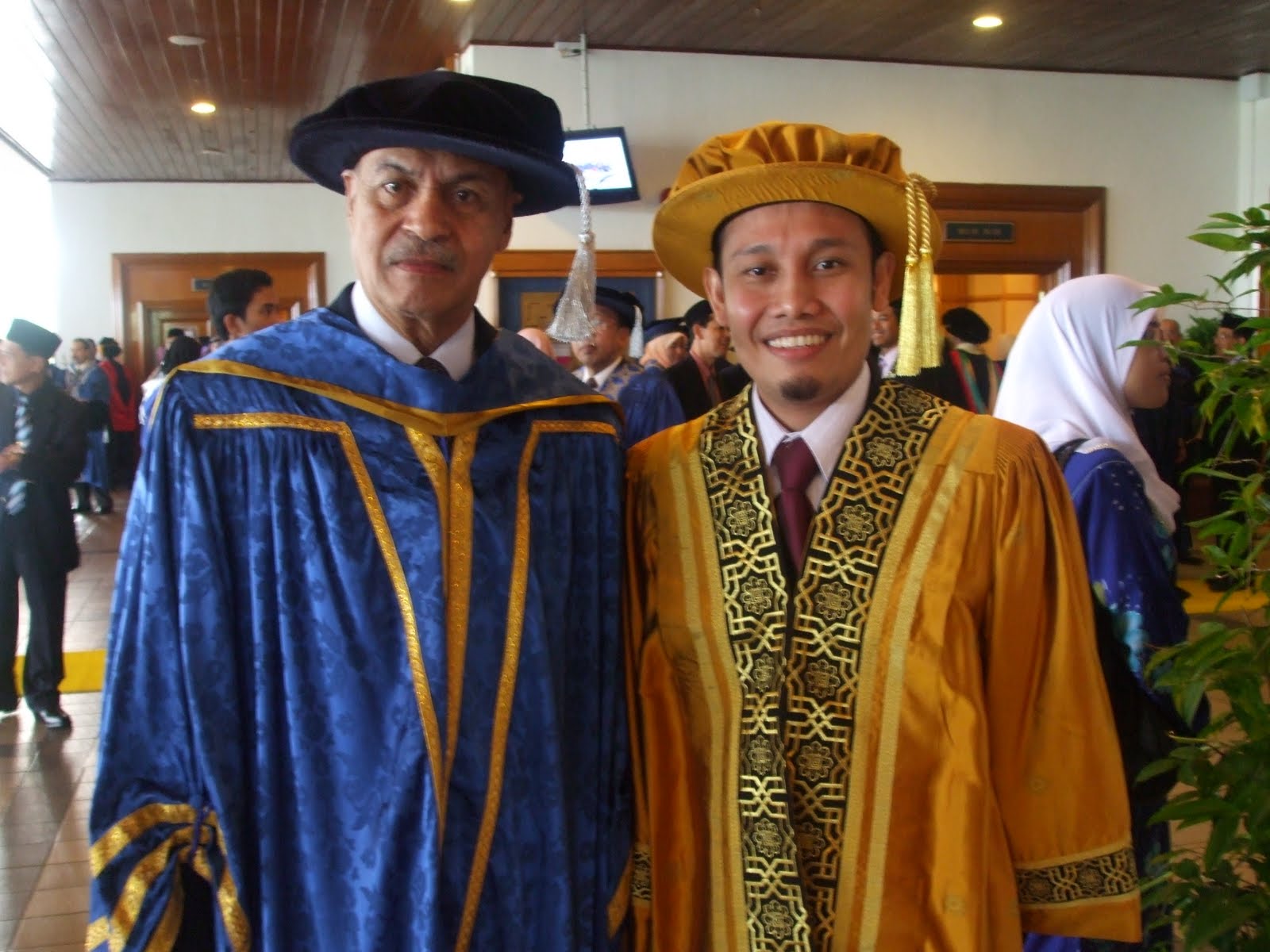

Convo UIA'08
Tuesday, March 6, 2012

Tuesday, February 21, 2012
TALK ON: FROM RAW DATA TO PAGES OF HIGH IMPACT JOURNAL PUBLICATION
DEAR GRADUATE STUDENTS,
PUBLISHING IN HIGH IMPACT JOURNAL PUBLICATION
YOU ARE INVITED TO ATTEND THE TALK.
THANK YOU.
----------------------------------------------------------------------------------------------
PUBLISHING IN HIGH IMPACT JOURNAL PUBLICATION
TITLE: FROM RAW DATA TO PAGES OF HIGH IMPACT JOURNAL PUBLICATION
DATE: 27 FEBRUARY 2012 (MONDAY)
TIME: 9.00 AM
VENUE: BILIK SERI AMAR
DATE: 27 FEBRUARY 2012 (MONDAY)
TIME: 9.00 AM
VENUE: BILIK SERI AMAR
YOU ARE INVITED TO ATTEND THE TALK.
THANK YOU.
----------------------------------------------------------------------------------------------
Tuan/Puan,
CERAMAH “PUBLISHING IN HIGH IMPACT JOURNAL”
Merujuk kepada perkara di atas, adalah dimaklumkan bahawa ceramah tersebut akan
Diadakan seperti maklumat di bawah:
Tajuk: FROM RAW DATA TO PAGES OF HIGH IMPACT JOURNAL PUBLICATION
Tarikh: 27 Februari 2012 (Isnin)
Masa: 9:00 pagi
Tempat: BILIK MESYUARAT SERI AMAR, FBMK
Tuan/puan dijemput hadir ke majlis tersebut.
Terima kasih.
"BERILMU BERBAKTI"
Friday, February 17, 2012
Voucher RM200
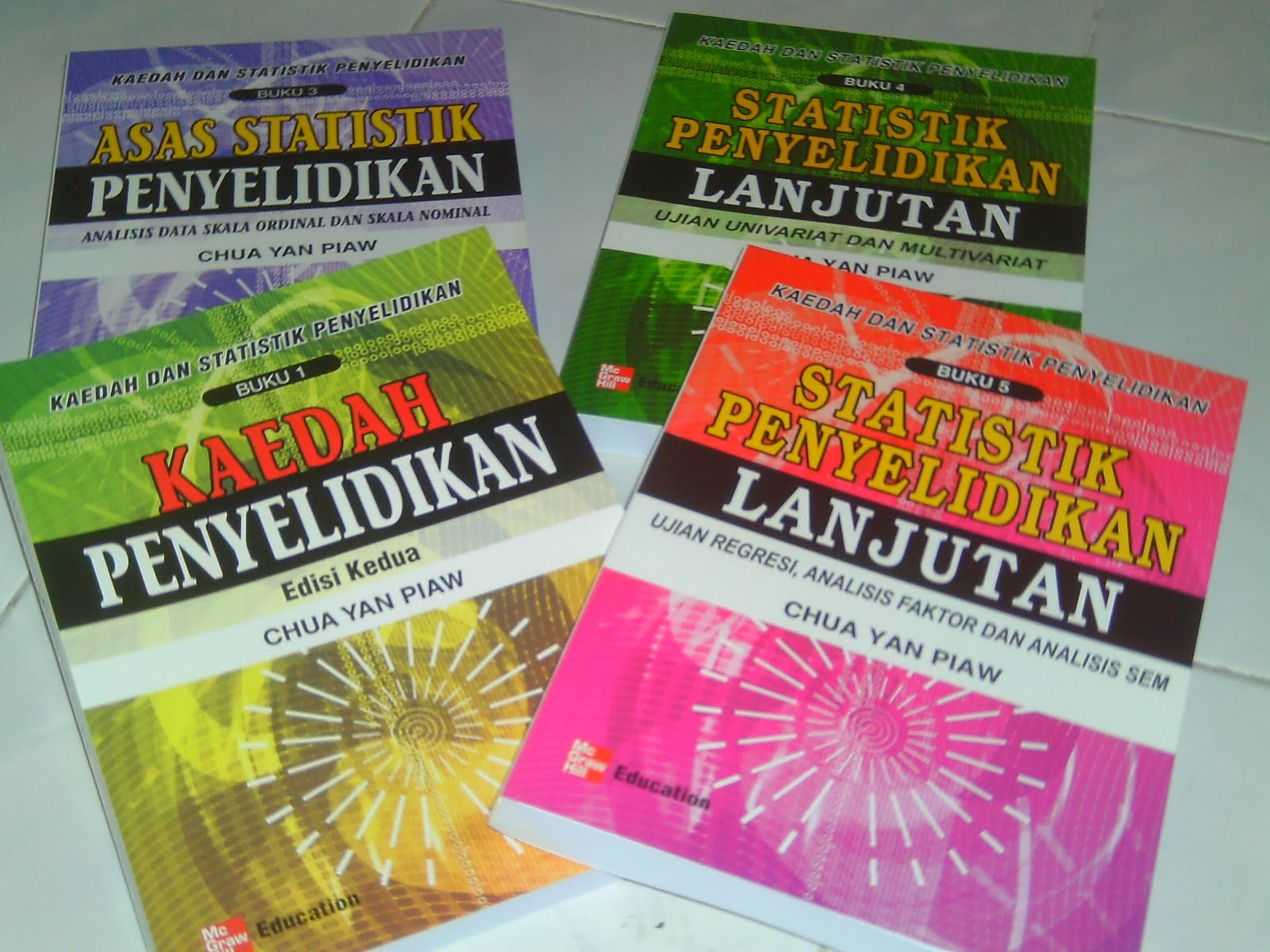 Voucher RM200 saya beli buku-buku ni di UIA.... tadi... selepas sesi class leadership and management...
Thanks Government of Malaysia...:)
Friday, February 10, 2012
COLLECTION OF PREVIOUS RESEARCHES
COLLECTION OF PREVIOUS RESEARCHES
MEASURING DETERMINANTS OF CITY BRAND:
A VERIFICATION APPROACH OF BRAND PERSONALITY SCALE IN MALACCA CITY
Muhamad Fazil Ahmad
Department of Communication,
Faculty of Modern Languages & Communication, Universiti Putra
43400 UPM Serdang, Selangor
Email: phd.countryreputation@gmail.com
Facebook: http://www.facebook.com/reputation.index
Code Project: PhD-CBP

Thursday, February 9, 2012
Ph.D Tip: Negative Thoughts Make It Harder
Another great dissertation tip for you...
I wanted to share this thought with you today:
Often, our own negative thoughts and beliefs about the demands of the dissertation process make the project more difficult.
If you can remember that the dissertation is meant to be a relatively simple process of critical thinking, organizing, writing, and refining, you'll be far ahead of many other graduate students. In addition, if you can remember that the process is a clear one, even when it doesn't feel that easy, you'll be even further ahead. J
Wednesday, February 1, 2012
Ph.D Tip: Feelings Aren't Facts
Dear All,
Feelings aren't facts.
This week, I've been reminded of the saying, "feelings aren't facts"- which, as I use it, means "your feelings are important, but they aren't necessarily true".
This is important to remember in the dissertation process (and in life) because, sometimes our feelings feel true.
Why make the distinction? Because, during the dissertation process, you will have feelings that say, "this topic is dumb." "I'll never finish", "I'm overwhelmed." "I don't know what to do." even as you may also have feelings of excitement, interest, and enthusiasm (these are more likely early on, and seem to decrease the longer it takes to write the #*(&* thing).
Anyway, when you feel down, depressed, or blue, you need to find a way of understanding that this is how you feel- right now- and that it's important- but may not be true.
Your topic is probably not dumb. You will definitely finish (if you do the work) and you can get help with being overwhelmed or not knowing what to do next.
Remember, feelings don't predict outcome. Feelings are not facts.
Until next time,
My Research Inspiration in Brand Personality

Jennifer L. Aaker
General Atlantic Professor of Marketing
Knight Management Center, Stanford University

Prof. David Aaker,
University of California, US
My research project inspiration...in "City Brand"… :)

Prof. Melewar, Brunel University, UK
Wednesday, January 25, 2012
Ph.D Tip: Lessons Learned from the Dissertation
How's it going, everyone?
I have discovered another powerful article on dissertating for you…
Lessons learned from the dissertation….
Abstract
An author with a new doctorate shares lessons learned about writing a dissertation. Lessons include (1) there are few sources to guide one on how to write a dissertation; (2) it is easier to critique research than to create research; (3) dissertation writing is an evolutionary communication process; (4) criticism is good; (5) dissertation writing produces a product; (6) hypotheses rule and methods matter most; and (7) less is more. Additionally, the author asserts that (8) writing for dissertation is an apprenticeship experience that prepares one for writing for publication.
FOR THE LAST 2 1/2 YEARS, I have been writing my dissertation; it is just recently completed. During this experience, I learned a few things about dissertation writing. From an "insider" perspective, this is a summary of those lessons.
This article is for doctoral students who are sweating over another draft of a rising pile of discarded dissertation drafts while considering if it would be more fun to wash walls and clean closets. My own personal draft discard pile rose to 31/2 feet. The walls and closets should have gotten cleaned, but I forced myself to write instead. Within the prolonged writing effort, I have learned that there are few sources that guide one on how to write a dissertation; that it is easier to critique than create; that dissertation writing is an evolutionary communication process; that criticism is good; that dissertation writing produces a product; that hypotheses rule and methods matter most; that less is more; and that the dissertation writing experience is an apprenticeship.
Lesson 1: There are few sources to guide one on how to write a dissertation.
There are written guides for what to put in a dissertation, and there are guides for surviving the dissertation process (Newman, Benz, Weis, & McNeil, 1997; Rudestam & Newton, 1992). There also are guides for reference and bibliography formats (American Psychological Association, 2001). Every university provides a detailed list of overall dissertation formatting requirements which one must meticulously follow. Additionally, the informal network of former doctoral students gives ongoing advice that is sometimes paranoid, and sometimes practical, for example, to have "lions" for committee chairs (versus more timid animals), to expect to be "beaten up" verbally in a defense hearing, to have a writing schedule, to set specific dissertation goals, to expect to give the committee members anything they want, etc. While I found that each of these sources was a contribution to my dissertation development, none of them told me how to write a dissertation. When I sat in front of a blank computer screen- they did not tell me how to construct the sentences, what to include or exclude in a paragraph, how to write the hypotheses, or what to emphasize in the draft.
Further, my own innate love of writing was not at all helpful in the dissertation writing process. In my experience, the dissertation writing process was often tedious, and the statistical analysis was often magically exciting-the opposite of my early predictions. I grew up writing stories at the age of 6, for example "Ollie the Otter," and poetry in my teen years, such as, "At night, by candlelight, the lioness and I have ruled the world ... alas, time has depleted what the sun has obscured." Even today, I feel elation at reading about the creative process of writing described as "my job-my itch, urge, dream, hobby, entertainment, prayer-is to tell stories on paper ... that inform and move their readers, and that is what I do to shoulder the universe forward two inches" (Doyle, 2000, p. 44).
When I was writing the dissertation, I was frequently bored with the terse style of dissertation writing. Subject-verb-object-period. Subject-verb-object-period. Subject-verb-object-period. My creative flair had failed to prepare me for this writing style. Nonetheless, subject-- verb-object sentences-terse, dense, and rapid-were the style required to relay the "what" of the content, to survive the stages of the dissertation, to serve as the text within the required document formats, and to negotiate the paranoia and practicality of the process. In other words, subject-verb-object sentences got the job done.
Lesson 2: It is easier to critique research than to create research.
The doctoral course work prepared me well to critique research journal articles. I could quickly find disagreement between statistical outcomes and discussion/recommendations. Low sample number and nonexperimental designs were easy fodder for criticism. I was suspicious of one-tailed t-scores, low statistical power, missing theory, statistical procedure assumption testing, new standardized tests, and sampling procedures. "So what?" I would say aloud, to articles that offered no practical social work implications. These research method critique skills were most
helpful in writing the limitations of my dissertation, a section which spanned three of the 227 pages.
The research critique skills were often a barrier to writing the dissertation, especially during the formative stages of document development, i.e., the prospectus and early dissertation drafts. Generation of ideas for research led quickly to cognitive leaps of research limitations. Acknowledgment of the limitations made me fearful to proceed. It held me up in the writing process for a good 6 months. Especially fear-invoking were those pages of checklist questions for analyzing a research study that were so helpful for the qualifying examination. I would apply the checklist questions to my sketchy ideas of a research study and feel bombarded by deficit and doubt. I strongly suspect that newfound capacity to critique research is a barrier completion factor for people who never leave the All-But-Dissertation state.
Only after I was forced to create research and to accept the necessity of research limitations, was I able to understand the long pauses and discouraged looks of my research methods professors, when my doctoral colleagues and I voraciously attacked a piece of research. My message for doctoral students: Be prepared to live with research limitations. Put the research checklists away for a while. Be kind to yourself; it is hard work to create research.
Lesson 3: Dissertation writing is an evolutionary communication process.
While some doctoral dissertation guides touched upon the fact that dissertation writing is a process, they did not explore this concept in enough depth. In writing my dissertation, I learned that the dissertation production is a long series of communication behaviors; it is an ongoing, dynamically changing evolution of explanations, negotiation, compromise, and sometimes, capitulations. It is necessary to work and rework the writing to make things clearer. There is much questioning and defending of one's conceptual assumptions to support the infrastructure of the research. Committee members don't always agree or understand things the same way. They may advise one to proceed in ways that are incongruent. It is a delicate maneuver to relay the input of one member to another in such a way that all are reasonably satisfied.
One piece of advice from the informal network that did help me was this, "Remember, this is not just your work. It is the work of the committee." This saying made even more sense when the dissertation document began to turn in unanticipated directions or new, puzzling (to me) requirements were added. They helped me deal with a natural tension within the writing process-independence versus dependence. While the dissertation process requires much independence and self-directed behaviors (see wall and closet cleaning versus writing), one is operating within the confines of a sometimes remote group of directors/editors. At times, it is necessary to yield to the wishes of those who mentor sporadically, and from far distances. Communication helps one negotiate this wieldy process.
Lesson 4: Criticism is good.
An important lesson of my dissertation writing process was that committee members who provided more feedback, including more negative feedback, often helped me the most. It was not easy to hear that the latest draft had many weak areas, inconsistencies, and repetitions. While these exchanges were certainly a communication process phenomenon, I think it was a sufficiently important lesson as to stand alone.
Originally excerpted
from: http://www.looksmartsavings.com/p/articles/mi_qa3625/is_200111/ai_n9007323/pg_2?pi=monsav
Some valuable information here. Hope you found it useful.
Thank You…
Writing a dissertation: Lessons learned Families in Society,
Nov/Dec 2001 by Riebschleger, Joanne
WRITERS AT WORK
Wednesday, January 18, 2012
Multivariate Data Analysis

Multivariate Data Analysis
For graduate (Master & PhD students) and upper-level undergraduate marketing research courses.
Global Edition
7th Edition
By: Joseph Hair, William Black, Barry Babin, Rolph Anderson
Mar 2009, Paperback, 816 pages
For over 30 years, this text has provided students with the information they need to understand and apply multivariate data analysis.
Hair et. al provides an applications-oriented introduction to multivariate analysis for the non-statistician. By reducing heavy statistical research into fundamental concepts, the text explains to students how to understand and make use of the results of specific statistical techniques.
In this seventh revision, the organization of the chapters has been greatly simplified. New chapters have been added on structural equations modeling, and all sections have been updated to reflect advances in technology, capability, and mathematical techniques.
Contents
1 Introduction: Models and
Section I Understanding and Preparing for Multivariate Analysis
2 Cleaning and Transforming Data
3 Factor Analysis
Section II Analysis Using Dependence Techniques
4 Simple and Multiple Regression Analysis
5 Canonical correlation
6 Conjoint analysis
7 Multiple Discriminant Analysis and Logistic Regression
8 ANOVA and MANOVA
Section III Analysis using Interdependence Techniques
9 Group data and Cluster Analysis
10 MDS and Correspondence Analysis
Structural Equation Modeling
11 SEM: An Introduction
12 Application of SEM
Thursday, January 12, 2012
Facebook for My Research
Assalamualaikum... ada masa mari singgah di FB ni ye... [http://www.facebook.com/reputation.index] ianya dibuat untuk memudahkan interaksi bersama respondan untuk kajian PhD saya ini... :)

PhD : The Pursuit of Excellence

PhD : The Pursuit of Excellence is an updated edition of 'So You Want to Get a PhD'.
The Author of this Book is Dr. Kamarul Bin Ahmad
This book aims to assist a final year Master's student or graduate in making an informed decision on whether or not to pursue a PhD. It provides the reader with an understanding of what a PhD actually is and what it can do for the holder. The book explains the structure of the thesis, the process of gathering information and writing.
It includes a new chapter on Research Methodology as well as the author's new experiences and knowledge gained during his five-year tenure as PhD supervisor and one-year tenure as Chairman of the PhD Committee. There is also a chapter on the seven strategies of excellence practiced by successful PhD students.
Ph.D Tip: Clarify Now or Later
Dear Muhamad,
When dealing with your advisors, it's always important to clarify: now or later?
Often, ABD's feel frustrated in their attempts to work with their advisors, especially when the advisor suggests major revisions and then, once these are completed, has the student take out all the revisions and go back to the original version.
Experiences like this are frustrating and challenging. When your advisor suggests revisions, especially in the middle/ending stages of your writing, be sure to clarify whether the suggested revisions are for now or for later.
Sometimes, as you get close to finishing the dissertation, your advisor is already thinking ahead about turning your dissertation into a book manuscript- and some of his/her comments might be about revisions for the manuscript, not the dissertation. You can save yourself a lot of work, effort, and grief if you take the time to clarify whether suggested revisions are for now (dissertation) or for later (book manuscript).
When in doubt, it's always better to ask a few more questions than a few too less. This applies for any other part of the dissertation process, too!
Until next time,
Monday, January 9, 2012
Siri Ceramah... @ Masjid Wilayah Kuala Lumpur
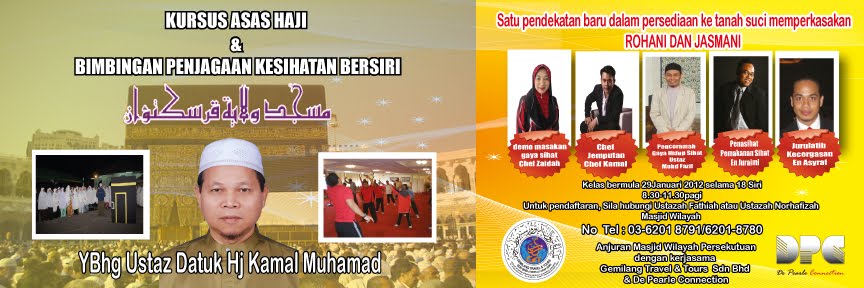

Program Bersama:
- Chef Zaidah (Malaysia)
- Chef Kamal (Singapura)
- Muhamad Fazil (Malaysia)
- En. Juraimi (Singapura)
- En. Asyraf (Singapura)
Kursus haji bersama:
- YBhg. Ustaz Datuk Haji Kamal Muhamad
Tempat: Masjid Wilayah Kuala Lumpur
Waktu: Selama 18 siri
The 21st AMIC Annual Conference: Announcement and Call for Abstracts, Papers and Panel Proposals
The 21st AMIC Annual Conference: Announcement and Call for Abstracts, Papers and Panel Proposals
The Asian Media Information and Communication Centre (AMIC), Singapore, is proud to announce its 21st Annual Conference, in conjunction with its 40th anniversary, to be held in partnership with the Faculty of Communication and Media Studies, Universiti Teknologi MARA (UiTM). The conference will be held from July 11-14, 2012, at Hotel Concorde, Shah Alam, Malaysia.. The theme of the conference is ‘Forty Years of Media and Communication in Asia: Retrospect, Introspect and Prospects”. The conference invites abstracts, papers, panel proposals and media presentations for consideration. There will be a separate local track, specific to Malaysia, on the conference theme.Pre-conference capacity building workshops will also be held on July 10 ,2012, and proposals are also invited for topics and themes for these workshops
Against the background of the 40th anniversary of AMIC, as well as that of UiTM, the conference proposes to take stock of Asian media and communication studies, keeping in mind the challenges and opportunities arising out of globalisation, new media and the resurgence of Asia. The conference seeks to address the problems and prospects that emerge from these new global developments for media practitioners, media owners and operators, and communication scholars, especially in terms of examining and analysing present theory and practice. During the four-day conference, delegates will be exposed to thought-provoking presentations and papers from media experts, industry practitioners and academics who will provide retrospective and introspective views on Asian media and communication, besides looking at the prospects for the media scene in this part of the world. They will be able to reexamine, reinterpret and take stock of 20th century perspectives and propose contemporary paradigms that are more relevant to the present.
This flagship annual conference has been hosted in rotation by countries across the Asia-Pacific region. Recent annual conferences have been held in Hyderabad, India (2011), Singapore (2010), New Delhi, India (2009), Manila, Philippines (2008), Singapore (2007) and Penang, Malaysia (2006). This premier event on Asian media attracts eminent international speakers and participants from the media industry and academia. This premier event attracts close to 400 academics, media industry professionals, government agencies, policymakers, regulators, UN agencies, donors, research groups, civil society organisations, independent consultants and students from all over the world. It features high-profile keynote addresses, plenary sessions and several parallel track sessions. Networking events, cultural programmes, media visits and sightseeing events are also held in conjunction with the annual conference.
AMIC invites panels, papers and media presentations in especially the following areas:
· Media and Globalisation
· Risk, Stigma and Health Communication
· Advertising and Public Relations
· Communication and Culture
· Radio, Television and Entertainment Studies
· Communication and Multi Media Campaigns
· Political Economy of the media
· Independent, National and Asian Cinema
· Internet and New Media
· Communication Theory and Methodology
· Public Service Broadcasting and Community Radio
· Media, Information and Communication Literacy
· Media, Climate Change and Environment Studies
· Newspaper, Radio, TV and Magazine Journalism
· Communication Technology
· Mass Communication, History and Society
· Communication and Journalism Education
· Media Management and Economics
· Media and Development
· Media and Democracy
· Media and Ethics
· Media and Good Governance
· Media and Gender
· Media and Youth
· Media Law and Regulation
· Alternative and Community Media
· Media Industry Trends and Dynamics
· Asian Perspectives on Communication
· International Communication
· Culture and Critical Studies
· Film Studies
· Documentary Production
· Language Journalism
· Multimedia Production
· Diaspora studies
· Communication Policy and Regulation
Call for Papers- important information*
Abstracts Due: 15 February 2012
Full Papers Due: 16 April 2012
Conference Dates : 11-14 July 2012
Venue: Concorde Hotel, Shah Alam, Selangor
Email: amic2012@amic.org.sg
For further information please contact Dr Sundeep R.Muppidi, Secretary General,AMIC at sundeepmuppidi@amic.org.sg or amic2012@amic.org.sg.
*(For local track, see below)
---------------------------------------------------------------------------------------------------------
LOCAL MALAYSIAN TRACK ON CONFERENCE THEME:
UiTM-AMIC 2012 Conference
The Faculty of Communication and Media Studies, Universiti Teknologi MARA (UiTM), invites submissions of proposals (both individual papers and collective panels) for the Malaysian Track of the 21st Annual AMIC Conference from July 11-14,2012.
The Malaysian Track will be based on the theme, “Forty Years of Media and Communication in Malaysia: Retrospect, Introspect and Prospects”. Itwill be held simultaneously with the 21st AMIC Annual Conference at Concorde Hotel, Shah Alam, Selangor
Suggested topics for papers include, but are not restricted to, the following:
· Media Issues and impact: Retrospect, Introspect and Prospects
· Peace Journalism: Malaysian Experience
· Gender and Media in Malaysia
· Public Relations
· Advertising
· Ethnicity, diversity and media
· Media education
· Communication and new social media
· Media and Politics in Malaysia
· Youth and Media
· Ethical and legal issues in Malaysian Media
· Convergence and Media Policies
· Family Communication
· Communication Management
· Media, Community, and Culture
· Malaysian Media and Globalisation
Submission of Abstracts:
Paper proposals should be one page long, and should list the author's name, address, university affiliation, telephone and e-mail, followed by the paper's title and an abstract of 500 words. The abstract should specify the subject, research questions asked, methodology and indicate some of the findings. Proposals will be peer reviewed. The same paper cannot be submitted to the main conference and the local track.
Submission of abstracts can only be done via email to uitm.amic2012@gmail.com
The deadline for submission is 15 February 2012. All accepted papers and abstracts will be published in the conference proceedings.
Call for Papers- important information
Abstracts Due: 15 February 2012
Full Papers Due: 16 April 2012
Seminar Dates : 11-14 July 2012
Venue: Concorde Hotel, Shah Alam, Selangor
EMail: uitm.amic2012@gmail.com
For further information please contact Dr Kiranjit Kaur at 012-3813145 or Dee at 03-55444860.
Tuesday, January 3, 2012
Ph.D Tip: Feel Better First
Assalamualaikum... w.b.t.....
Dear All,
Feel Better First.
If you're feeling ragged, tired, or irritable, you're not that likely to make good progress on your dissertation. A better strategy is to do what it takes to feel better, first - and then start working. It's better to have two hours of focused work rather than four hours of so -so work.
It can be a mistake to keep pushing yourself past the exhaustion point. It can take longer and longer to recover from dissertation burnout.
Emotional management is a necessary first step to sustained productivity.
Until next time…
Subscribe to:
Posts (Atom)
Popular Posts
-
 DEFINISI KOMUNIKASI Oleh: Muhamad Fazil Ahmad “Kalau kamu berada di rumah orang, hendaklah kamu jaga matamu, jika kamu berada di t...
 -
 Having completed and submitted the thesis, a candidate will then have to prepare for the viva session. A viva is basically an oral...
 -
 Department of Communication University Putra Malaysia Ph.D. Comprehensive Examination Name of candidate: Muhamad Fazil Bin...
 -
 PhD PROJECT : By: Muhamad Fazil Ahmad PhD Candidate UPM MEASURING DETERMINANTS OF CITY BRAND FOR INSTITUTIONALIZING STRATEGIC COMMUNICATIO...
 -
 Oleh: Muhamad Fazil Ahmad “Tiga rukun yang benar dan perlu dalam mencapai utama iaitu dengan tabiat, dengan pengalaman dan dengan pelajaran....
 -
 Khutbah ini disampaikan oleh Baginda Nabi Muhammad s.a.w. pada 9hb. Zulhujjah tahun 10 hijriyyah di Lembah Uranah Gunung Arafah. Wa...
 -
Dalam Islam terdapat pengajaran yang menyatakan ‘sembilan persepuluh dari rezeki itu ada dalam perniagaan’. Ini bererti jika kita ingin mend...
-
Bahasa Inggeris merupakan satu bahasa yang amat penting dewasa ini. Malahan kerajaan telah menyatakan bahawa sesuatu bangsa tidak akan maju ...

