PENGALAMAN & KERJAYA

MUHAMAD FAZIL HJ. AHMAD

Idola: Nabi Muhammad S.A.W

E-mail: islah_project@yahoo.com

3 Ogos 1979

Temerloh, Pahang


Education Background:

Doctorate - PhD. Communication - Branding (UPM) - 2013

Master in Communication - M.A.HSc. (Comm. UIA) - 2006

Bachelor in Comparative Religion and Communication (hons.) (UIA) – 2003


Career Background:

Senior Lecturer DS51 Faculty of Applied Social Sciences - UniSZA

Ahli Jawatankuasa Projek FRGS B-F1 “Branding Index”

Manager Student Activities and Alumni Department.

Manager Graduate Affairs Department, Kolej Islam Antarabangsa Malaysia

Tim. Dekan Pusat Bahasa Komunikasi, Kolej Islam Antarabangsa Malaysia

Kordinator Fakultas Komunikasi, Universitas Islam Antarabangsa Jakarta

Pensyarah Kolej Islam Antarabangsa Malaysia

Pensyarah Technology Park Malaysia College

Penasihat, Kelab Debat dan Komunikasi Kolej Islam Antarabangsa Malaysia

Penasihat, IIC Alumni Association

Pengarah Istiadat Convokesyen 2008-2010, IIC

Penceramah, Motivasi di Eastana Event & Consultancy

Penceramah, Sesi Kesihatan Jemaah Haji Masjid Wilayah KL

Penceramah, Sesi Kesihatan Jemaah Haji Masjid Al-Hasanah Bandar Baru Bangi

Penceramah, "Program Empower", East Coast Economic Region (ECER)

Penceramah, Pertubuhan Kemajuan Sosial Malaysia. ECER Hulu Terengganu

Pengacara Rancangan TV "Chef Halal" (2012)

Jurucakap Produk Kesihatan SayHeart Singapore (2011)

Jurucakap Produk KOFAZ (2009/2010) – All One

Ahli Kumpulan Nasyid All One

Calon bagi Anugerah Industri Muzik Ke-16 - All One

Calon bagi Anugerah Nasyeed.Com - All One


Research Projects:

(1) FRGS Project (BF1) (2010 – 2011) – “Developing a new branding index in corporate communication for an Asian country” (Research Assistant).

(2) Research (2009 -2012) – “Leveraging country's reputation and nation brand index in Bandar Melaka: Potential strategies for developing Malaysian’s city brand index”.

(3) Project (2010): “Measuring Determinant of City Brand for Institutionalizing Strategic Communication: A Study of Malacca City”.

(4) Ph.D Proposal Dissertation (2010): “Measuring Determinants of City Brand: Investigating the Antecedents of Perceived Brand Personality Scale in Bandar Melaka (Bandaraya Bersejarah)”

(5) New Research Project (2013 - 2014) – “Identifying the Determinant Attributes of Halal Brands Index (HBI) that Influence the Corporate Marketing Communication (CMC) in Malaysian Market”.

(6) New Research Project (2014) – “The upcoming of innovation: Integrating Technology and Human personality”.


Conferences and Proceedings:

(1) Zakiah, M. Othman, I. & Ahmad, M.F. (2010). “Halal Business Corporate Social Responsibility”. International University Social Responsibility Conference & Exhibition - IUSRCE 2010, PWTC Kuala Lumpur, UTM Skudai, Johor, Malaysia.

(2) Ahmad, M.F. & Abdullah. Z (2011). “Measuring Determinants of City Brand: A Varification Approach in the Corporate Communication Perspective in Malacca City”. MENTION 2011, UKM Bangi. Selangor, Malaysia.

(3) Ahmad, M.F., Abdullah. Z., Ezhar Tamam & Jusang Bulong (2012). “City Brand: An Application of Brand Personality Scale to Bandar Melaka”. 21st AMIC Annual Conference 2012, Concorde Hotel, Shah Alam, UiTM Shah Alam, Selangor, Malaysia.

(4) Ahmad, M.F., (2013). “The Stakeholder Interpretation of City Brand Personality Determinant for Strategic Communication”. Seminar Hasil Peyelidikan, Kementerian Pengajian Tinggi 2013 - Sains Sosial dan Kemanusiaan, 2 & 3 July 2013 at EDC Hotel, Universiti Utara Malaysia, UUM Sintok, Kedah, Malaysia.

(5) Ahmad, M.F., (2013). “The Antecedents of Halal Brand Personality in Malaysian Takaful Industry: A Preliminary Review”. 1st Insurance and Takaful International Symposium. 7th - 8th October 2013 at Puri Pujangga UKM Bangi, Selangor, Malaysia.

(6) Ahmad, M.F., (2013). “CSR implementation in Islamic Philanthropy: A Preliminary Review of Halal Brand Personality Concept in Malaysian Takaful Industry”. World Universities Islamic Philanthropy Conference 2013. 4th – 5th December 2013 at Menara Bank Islam, Kuala Lumpur, UiTM Shah Alam, Selangor, Malaysia.

(7) Ahmad, M.F., (2013). “The Issues of Future Innovation: Integrating Technology and Human Personality for Reputation Management”. 2nd International Management Conference 2013 IMaC'2013. 14th – 15th December 2013 at Taman Tamadun Islam, Kuala Terengganu, Terengganu, Malaysia, UniSZA Kuala Terengganu, Terengganu, Malaysia.

(8) Ahmad, M.F., (2013). “The Role of Halal Brand Personality Determinant in Malaysian Takaful Industry”. 2nd International Management Conference 2013 IMaC'2013. 14th – 15th December 2013 at Taman Tamadun Islam, Kuala Terengganu, Terengganu, Malaysia, UniSZA Kuala Terengganu, Terengganu, Malaysia.

(9) Ahmad, M.F., (2013). “Halalan Taiyyban: The Application of Brand Personality in Malaysian Food Industry”. International Conference on Halal Global 2013. 15th – 16th December 2013 at Perdana Hotel, Kota Bharu Kelantan, UiTM Machang, Kelantan, Malaysia.


Publications:

(1) Ahmad, M.F. (2006). Communication Technology and Organizational Performance: An Analysis of The IIUM Community’s Web Sites Usage and Perceptions. Research in Master Thesis IIUM Library. IIUM.

(2) Ahmad, M.F., Abdullah. Z, Tamam. E & Bolong. J., (2013). Determinant Attributes of City Brand Personality That Influence Strategic Communication. Canadian Social Science. Canadian Academy of Oriental and Occidental Culture. Vol. 9 No.2.

(3) Ahmad, M.F., Abdullah. Z, Tamam. E & Bolong. J., (2013). An Application of Brand Personality to City Brand for Strategic Communication. International Journal of Social Science Tomorrow. Society for Promoting International. Vol. 2 No.5.

(4) Ahmad, M.F., Abdullah. Z, Tamam. E & Bolong. J., (2013). Involving Internal Stakeholders in Developing City Brand Personality for Strategic Communication. Asian Social Science. Vol. 9 No.10.


Editorial Board Members:

(1) Editorial Board Members for the Journal of Basic and Applied Scientific Research – [ISI-Thomson] (13th November 2013), International Society Applied Sciences, Cairo, Egypt & United States of America (USA). - Global Impact Factor = 0.432


Invitation to Paper Review:

(1) Reviewer for the Journal of Place Management and Development – [Emerald insight Journal] (10th September 2013), Institute of Place Management, 1 Queen Anne's Gate, Westminster, London.


My Inspiration:

“The comprehensive excellence achievement is balancing of our life journey”

-Fazil, 2009-


“The requirement of comprehensive excellence achieved is balancing of our life journey” -Fazil, 2009-
TEACHING SPECIALIZATION:

1) Public Relations

2) Corporate Communication

3) Advertising

4) Branding & Reputation

5) Crisis Communication

6) Public Opinion & Propaganda

7) Islamic Studies

8) Moral Studies

9) English Language


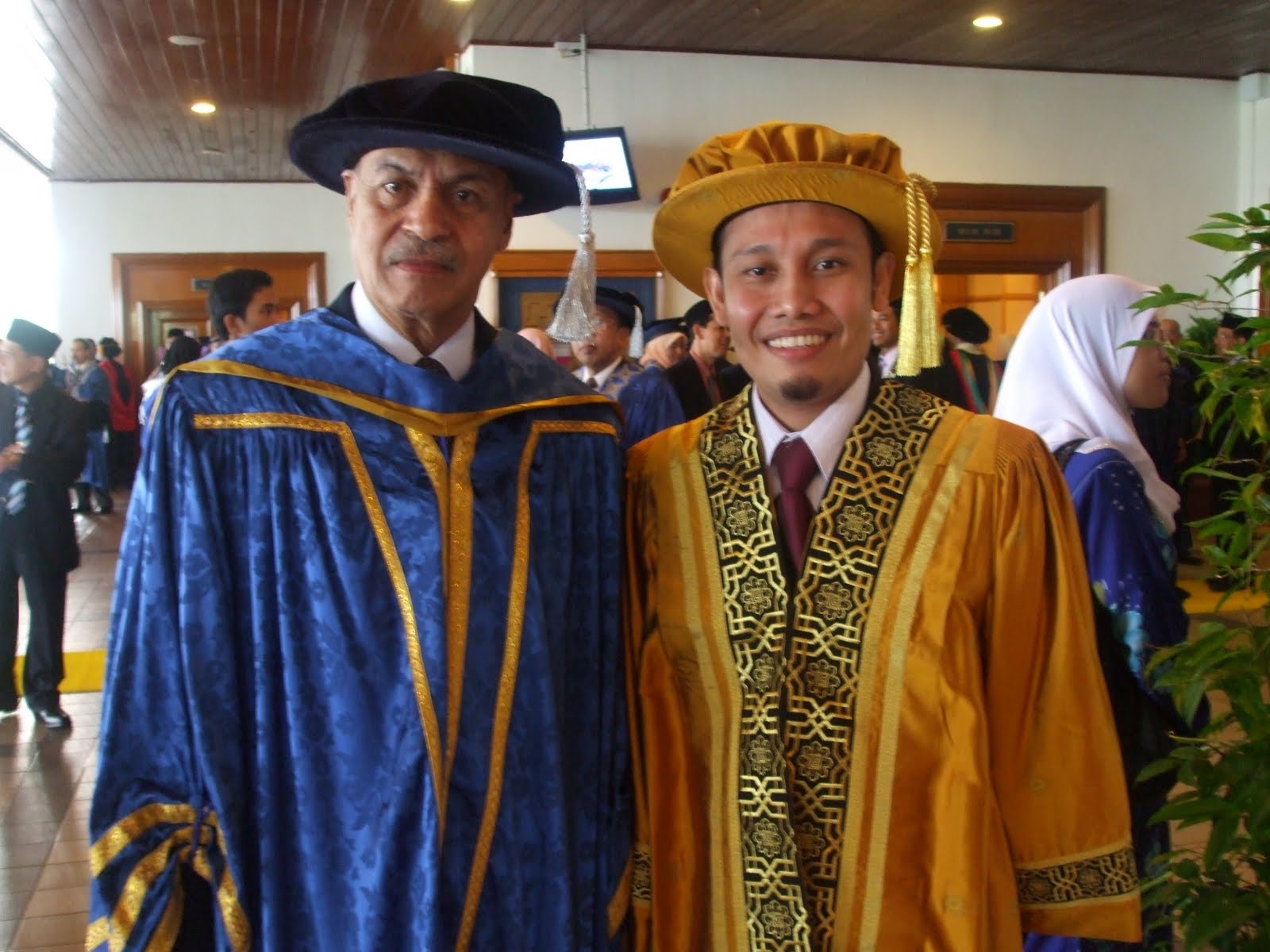
Convo UIA'08

Saturday, October 20, 2012


SEM: Model Fit of...

MEASURING DETERMINANTS OF CITY BRAND PERSONALITY FOR REPUTATION MANAGEMENT: TOWARDS DEVELOPMENT AND PROSPERITY OF BANDAR MELAKA
(BANDARAYA BERSEJARAH)
   
MUHAMAD FAZIL BIN HAJI AHMAD


DOCTOR OF PHILOSOPHY
(COMMUNICATION)

UNIVERSITI PUTRA MALAYSIA


2012


Wednesday, September 26, 2012

National Research & Innovation Conference for Graduate Students in Social Sciences 2012


National Research & Innovation Conference for Graduate Students in Social Sciences 2012


In Pursuit of Excellence in Research

The Organising Committee of the National Research & Innovation Conference for Graduate Students in Social Sciences is inviting you to participate in their first conference. Presenting the theme, In Pursuit of Excellence in Research, this conference aims at providing the graduate students the needed exposure in their respective areas of expertise. 

The conference serves as a platform for the students to embark on quality research with clear guidance from lecturers and supervisors. It is the intention of the conference to facilitate students in the expansion of their networking among peers and fellow researchers. Participation from both local and international students who are currently pursuing their Masters and PhD in social sciences in Malaysian public and private institutions of higher learning is encouraged.

The conference covers a diversity of contemporary topics on social sciences such as accounting, anthropology, arts and design, communication, economics, education, family studies, finance, human development, languages and linguistics, law, management, marketing, music, psychology, sport science, sociology, tourism and hospitality, and others. Graduate students can anticipate a series of exciting and stimulating presentations which will ultimately bring constructive interaction, beneficial collaboration and wealth of ideas. 

We look forward to your paper submission and welcoming you to the conference. 

Organised by:
Universiti Putra Malaysia (UPM) and Ministry of Higher Education, Malaysia (MOHE)


Wednesday, September 12, 2012

Inch by inch, it’s a cinch!

Assalam...

Dear All,

I think... No matter how much I accomplished, I always felt it should have been more. No matter what I was working on now, I was continually bombarded with thoughts that I should be working on something else.

Sometimes, I had trouble focusing on the task at hand, and would flit from task to task, not really accomplishing anything.

Watching this pattern, I began to notice that I became stressed and unfocused whenever I began to think of the task in wholes- like… ‘I have to write a whole page, or I have to read the whole article, or I have to write the whole chapter.’

Instead of thinking in “wholes”, I asked myself to think in ones. ‘I have to write one sentence. I have to write one paragraph. I will write one page.’

As I began to focus on “ones”, I realized that any project, when broken down small enough, becomes easy to do. “Inch by inch, it's a cinch!” :)

I was reminded of this today when I was thinking about what to share with all of you. It might be a good time to evaluate our dissertation process. What’s working well for us? What needs to be different? What actions will we take to make this the year of our Ph.D.?

Remember, small steps can lead to big results.

Inch by inch, it's a cinch!

Cheers!!!

Fazil…

Friday, August 24, 2012

Ph.D Tip: How to Stay Motivated


Dear all,

I've been reviewing a lot of material on goal setting lately, and some of it is very applicable to the dissertation process. Two of the most useful ideas relate to setting realistic goals, and getting rid of unrealistic expectations.

Setting realistic goals means that you are able to complete the goals you define, within the time frame you designate for them. Realistic goals are specific, measurable, and can be monitored. At any point, someone else could examine your process and tell you where you are in relation to the goal.

Contrast that to very vague goals, such as "Write about the history of the bubonic plague"-- at any one point, could an outside observer determine how close or how far away you are from reaching that goal? If the answer is no, then the goal is too broad, and probably needs to be more specific and more well defined.

Unrealistic expectations show up when you feel overwhelmed or exhausted by your goals, and never feel that you're getting all that much closer, no matter how hard you work. Unrealistic expectations always leave you feeling bad and regretful. Unrelenting negative feelings are one sign that your expectations may be too high.

Completing the dissertation is, mainly, a test of your research capabilities and your capacity to self motivate. Managing your goal setting and negative feelings are two important steps to maintaining dissertation motivation.

Until next time,

Friday, August 3, 2012

Doa'...


Ramadan Kareem...Ya Allah alangkah indahnya hidupku ini seandainya umur dan imanku sama selari...Ya Allah Ya Rabil Jalil aku memohon kepadaMu dengan meningkatnya umur ini maka kau tingkatkanlah imanku Ya Allah… Ya Allah Ya Rahman aku memohon kepada mu berkatilah di atas seluruh usiaku yang telah Engkau berikan. Terima kasih Ya Allah untuk ilmu yang dilimpahkan kepadaku. Terima kasih yang tidak terhingga juga untuk setiap rezeki yang Engkau kurniakan. Terima kasih untuk setiap ujian kehidupan yang Engkau berikan. Terima kasih untuk bakat dan kelebihan yang telah Engkau anugerahkan kepadaku Ya Allah. Sesungguhnya terlalu banyak yang telah Engkau berikan kepadaku...dan terlalu sedikit pula aku bersyukur terhadapMu. MasyaAllah…

Dalam usia semakin bertambah ini...aku ingin menjadi lebih dekat padaMu Ya Rahman. Dalam usia yang makin jauh ini...aku ingin lebih tawadh’uk kepada Mu Ya Karim.

Ya Mujib Ya Malik...pimpinlah tangan hambaMu ini...pimpinlah hati hambaMu ini...pimpinlah langkah hambaMu ini akan sentiasa berada di atas jalan kebenaran. Ya Allah... sebagai hamba yang hina di sisi Mu, aku takkan mungkin mencapai kesempurnaan, tapi kasihanilah aku... bimbinglah aku agar sentiasa aku mampu memiliki hati yang teguh kepada agama Mu.

Ya Allah ya Tuhanku, aku memohon kepadaMu.. Kau ampunkankah seluruh kesalahan dan dosa setiap umat Islam… muslimin dan muslimat, muk’minin dan mukminat yang masih hidup dan yang telah meninggalkan kami dan panjangkanlah umur kami dalam membuat kebajikan serta berkatilah usia kami dan kategorikanlah kami di dalam golongan orang yang Abrar,
Amin Ya Rabbul Alamin!!! 

Sama-samalah kita membaca takbir اللَّÙ‡ُ اَÙƒْبَر sebanyak tiga puluh empat kali, tasbih سُبْØ­َانَ اللَّÙ‡ sebanyak tiga puluh tiga kali dan tahmid الحَÙ…ْدُ Ù„ِÙ„َّÙ‡ sebanyak tiga puluh tiga kali. Semoga usaha kita mendapat keberkatan dari Allah...


Thursday, August 2, 2012

Ph.D Tip: Focus on Efficiency, Not Perfection


Salam all...

If you're stuck at any point in the dissertation process, borrow my phrase: "focus on efficiency, not perfection." What this means is that you find the fastest way to get out of the quagmire and moving ahead on the path. This will mean different things to different people, but the focus needs to be on finding an efficient and effective way to move ahead, even when it's not perfect.

For example: let's say that you've been working on a particular chapter, writing it, rewriting it, re-rewriting it. You are using a lot of energy and making a lot of effort, but, somehow, it's just not quite right (yet.) So you have to ask yourself, do I need to be efficient? or do I need to be perfect? (Answer: you need to be efficient.) This means, you then ask yourself: how can I wrap this up as quickly and painlessly as possible? What is the most efficient method to get through this material and on to something else? 

Just the act of asking yourself this question may free you up enough to finish whatever you've been working on. But, even if it doesn't, just complete what you can, and then do the next thing and so on.

The dissertation writing is sometimes an iterative process, where you write some, then write about something else, then come back to the first concept and write some more. 

Allow yourself to have that iteration time, by focusing on being efficient, first, and drafting as much as you can- and then polishing/refining your writing later. If you're feeling frustrated or stuck, it's time to go for efficient completion of this stage, and forget about getting it perfect.
Until next time…

Thursday, July 19, 2012

Ph.D Tip: Underestimating Yourself


Dear All,

Have you ever stopped to think where you underestimate your talents?

I read an article recently that says that people tend to seriously underestimate what it is they could accomplish in 10 years.

What that leads me to think about is that most of the time we are setting our immediate goals too large, and then our long-term goals too small.

How this relates to the dissertation is in the process of creating your timeline and how you're going to finish. While it is definitely possible to complete your dissertation in a year or less, as I constantly say, an effective way to do it is by actually by working forwards.

So if you have in your mind that you want to complete the dissertation in a year or less, you need to figure out a way to work forward so that each of your goals in the interim is doable, reasonable and possible.

Most of the time you cannot script great things or amazing breakthroughs no matter how much any of us try. The best we can do is create what I would call a constancy of purpose. So even if every day you don't make stellar or stunning or amazing progress on the dissertation, your constancy of purpose is that you are taking one step after the other, putting one foot in front of the other to eventually reach your goal.

Until next time,

Sunday, June 24, 2012

Putra Sarjana Program UPM


Provision of Student Feedback and Examiner Report Writing Seminar

Wednesday, 11th July 2012
Registration time : 8.30 am – 9.00 am
Lecture time : 9.00 am – 12.00 noon
Venue : DKFPP2, Faculty of Educational Studies, UPM
Speaker : Associate Professor Dr Shakila binti Abdul Manan (Universiti Sains Malaysia)

Description

Provision of Student Feedback
The provision of feedback to students is an essential part of the learning process, in that it helps students better focus upon their respective fields of study, and can revive the completion of their degrees. This seminar will help prospective of engaging with the subject matter in a non-dismissive fashion, articulacy in communication, and presenting constructive criticism that students can build upon.

Examiner Report Writing
One often overlooked aspect of an academician’s responsibilities is being a member of an examination committee. Writing an effective examiner’s report requires largely the same mechanism as providing direct feedback to a student; but given that there is greater distance between the examiner and student than from the supervisor, this seminar will show future academicians how to maintain the delicate balance between wanting to be of help the student and maintaining academic rigour.

Others program:
1.      Introduction to Teaching Seminar – July 5, 2012
2.      Seminar on Managing The Writing Process – July 13, 2012
3.      The PhD Examination Process – July 14, 2012

Wednesday, June 13, 2012

Not Making The Progress You Want?


Not Making The Progress You Want?

If you've been spinning your wheels or not making the kind of progress that you want to make, here are your next three steps:

1. Your first step is to set a reasonable goal for the next week of progress. It might be 15 minutes a day. It might be 30 minutes a day; whatever the amount of time or the output that you create-two pages of writing or one page of writing-it needs to be something that you easily can do. You hear that or read that goal and you say--Oh, no sweat, that's totally not a problem.

2. The second step is that you need to set up a reward system for yourself when you actually have completed those actions or behaviors that you defined in step one.

3. The third thing is you need to just actually take the action. You go through then the cycle of behavior and reward, behavior and reward. Just commit to doing that for seven days. You can do anything for seven days, but commit to doing that for seven days, and then evaluate how much further along you've gotten compared to last week.

If you find that you've gotten further, and just as importantly, the process has felt better, keep doing more of the same.

If you find that this hasn't exactly worked for you (which I don't really expect), but let's just say that the 1% of people that this may not work for you, than your task is to figure out what parts of it can be adjusted or tweaked until you find a better working style.

Focus on ways to keep yourself working at a constant and steady pace. Remember, in the dissertation-like in life, slow and steady often wins the race.


Until Next Time...

Friday, June 1, 2012

The Dangers of Overestimation


Dear Muhamad,

I read an article recently that says that people tend to seriously overestimate what they can accomplish in one year.

A tendency to overestimate in the short term is one reason for a lot of dissertation frustration and failure. Imagine how frustrating it would be if you were trying to train your pet in a new behavior, and you initially set the criteria that your pet, (let's say it's a dog) your dog would need to sit up and beg, and you would reward it with a treat.

Let's say that your dog sits up and begs, and you give it a treat. Your dog does it again, but then you decide that you should change the behavior, and so you don't give your dog a treat. Then, the third day your dog does it again, and you don't give your dog a treat, and so on, and so on.

What ends up happening is very quickly the dog will extinguish his learned behavior. Without a proper schedule of reinforcement and reward, certain behaviors will die off.
How this relates to your dissertation process is this: Most of the time you don't give yourself adequate rewards and reinforcements for continuing your behavior. Let's say that you decide you're going to sit down and work for a half an hour today, which by the way, is a very good amount of time to work.

So you're going to work for 30 minutes today. You sit down, and you accomplish that, and you may give yourself a reward, and that feels great. Then somewhere between today and tomorrow you're going to think about your progress, and if you're like most of the people that I've worked with or that I know, you're going to start criticizing that. You're going to start saying-Well 30 minutes is really nothing, I probably could do an hour tomorrow.

Then what is going to happen is you are going to sit down and you are going to do kind eke out maybe an hour; or maybe you wont, maybe after between 30 and 45 minutes, you'll find yourself not really making any progress, and you'll eventually just give it up for the day.

But you will leave that saying-Well I didn't reach my goal, so I'm not going to give myself a reward.

Then you'll say--Well, if I didn't really quite meet an hour, the intelligent thing, or the emotionally relevant thing, would be to say-Well I didn't quite meet an hour, let me backup and see if I could do another 30 minutes or another 45 minutes.

What most of you will do, is you will end up saying--Well ok, what I should do then is probably just put in a two-hour block or four-hour block. Again, you will go into the work, you may or may not reach that goal, and you're not going to give yourself reward.

Then pretty soon, like teaching your dog a new trick, the behavior is going to be extinguished because you haven't reinforced it.

A better situation, or a better way to approach it, is to give yourself the time to meet reasonable and doable goals. So you would work for 30 minutes, and then reward yourself. The next day work for another 30, and reward yourself. The third day, 30- reward; the fourth day, 30-reward, etc., etc.

Now in a week of doing this, five days of doing this, you'll have put in at least 2 1/2 solid hours on your dissertation, which for some of you will be more than you've been over the past month or month and a half.

The idea is that you need to be consistent, and you need to set doable and reasonable goals along the way because you don't want to be caught in the trap of overestimating what you can do and then extinguishing any positive behaviors before they have a chance to actually become part of your repertoire.

Until Next Time,

-Dr. Rachna-

Wednesday, May 23, 2012

Reacting to Criticism


Dear Muhamad,

It's inevitable, really. If you spend time with people, you will get criticized. Not by everyone (hopefully) or about everything (hopefully), but people, by nature, can't seem to get by without offering (supposedly) helpful advice or feedback.

Let's get clear on one thing- criticism never feels good. Nobody likes it, especially when it feels unwarranted or is very severe.

The most you can do, really, is reshape your thoughts and feelings about criticism. I'd like to start by sharing with you that no place in life is as rife with criticism as graduate school.

In the guise of intellectual integrity or sophisticated discourse, there is a great deal of back-stabbing that happens. All of this can get in your way; muddying your feelings and making it hard to focus on the dissertation.

I spoke with someone about this earlier today. She is working on her dissertation and is also working full-time as a lecturer. She is struggling because she has little time to work on her dissertation (though she desperately wants to finish) and she's having some interpersonal problems with the chair of her department, who seems to be constantly criticizing her teaching skills, style, and approach to the subject matter in her classes.

As you can imagine, she's already overworked, kind of stressed out, and is having trouble focusing on the dissertation.

Now, I don't expect anyone to focus 100% on the dissertation when "LIFE" is going on, but, really, for this particular individual, finishing her dissertation is the fastest route to get out of her current situation.

In the meantime, though, here's what I suggested to her about dealing with the criticism, and I expect it will be useful for you too:

Criticism hurts more when you don't have enough social support in your life. When you don't have at least 5 people who think you're wonderful no matter what criticism cuts more deeply.

Criticism hurts worse when you are tired, stressed, or have run yourself ragged. When you are feeling good, it's difficult to take criticism so personally.

Criticism is not always in your best interest, and isn't always meant to serve you. If it hurts you, it's never helpful. You can ask people to provide feedback in more constructive ways.

Finally, when you have been (or felt) criticized, your best bet is to try and distract yourself as soon as you can. Don't relive the criticism over and over- that just makes it bigger and feels worse.

Talk out any criticism with people who love you, and aim to work through it as soon as possible. Don't pretend it didn't hurt. Instead, find a way to make it better.

See You Next Time,
-Dr. Rachna-

Popular Posts