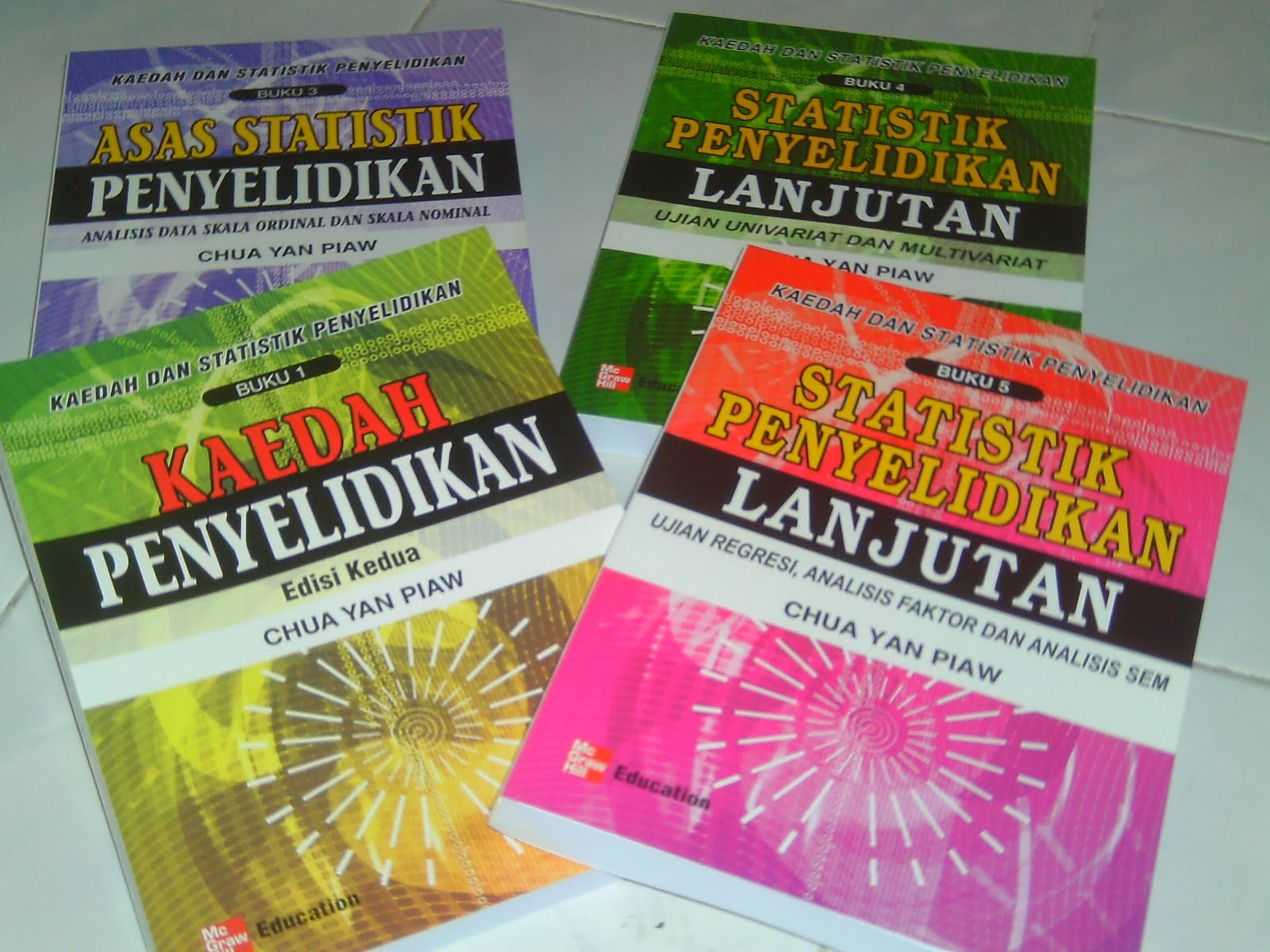
By: Shuhaimi Abdul Talib & Junaidah Ariffin
This book provides simple guidance that can drastically improves the quality of a thesis. Examples extracted from thesis and research reports are presented throughout the book.
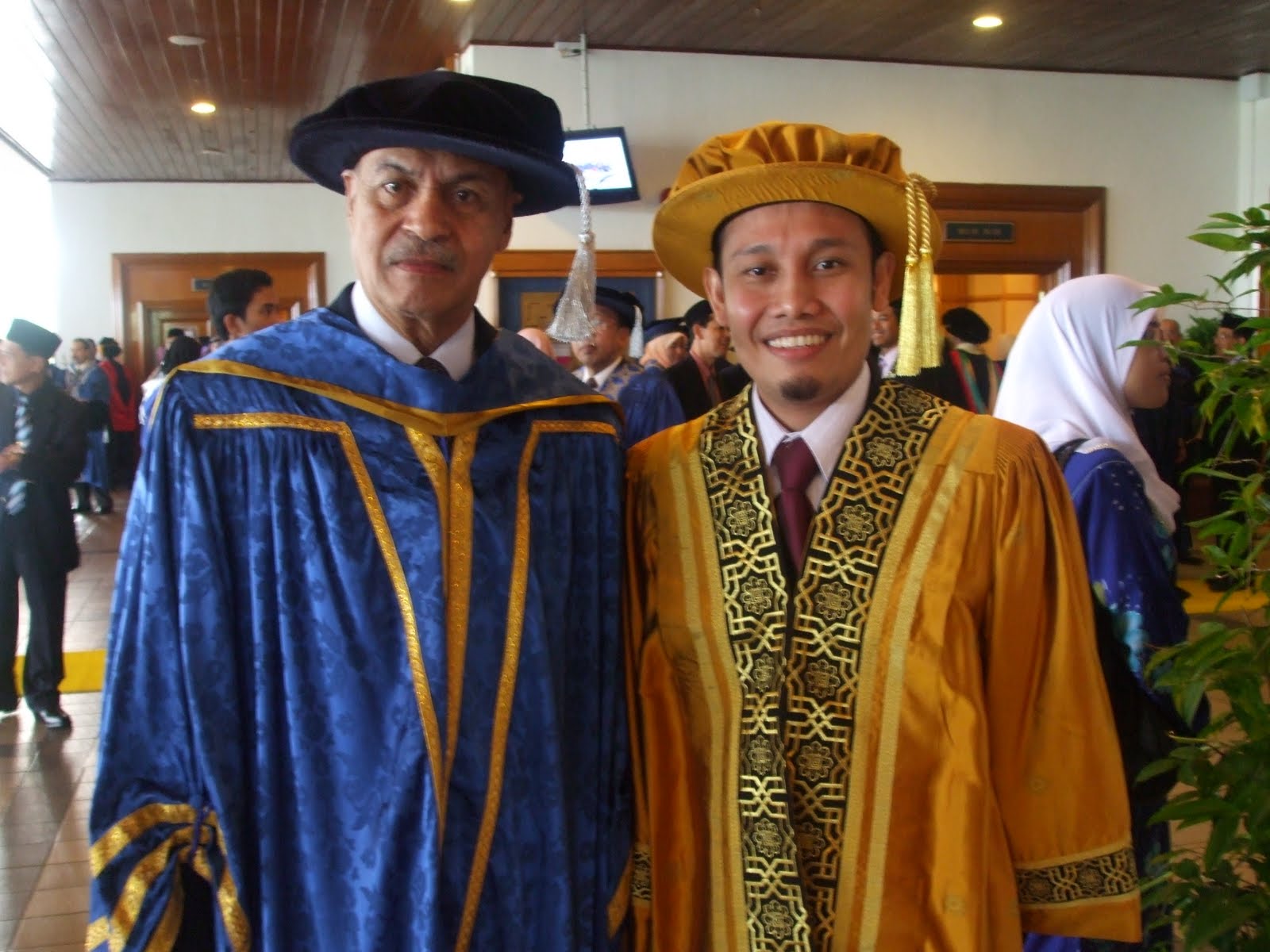
MUHAMAD FAZIL HJ. AHMAD
Idola: Nabi Muhammad S.A.W
E-mail: islah_project@yahoo.com
3 Ogos 1979
Temerloh, Pahang
Education Background:
Doctorate - PhD. Communication - Branding (UPM) - 2013
Master in Communication - M.A.HSc. (Comm. UIA) - 2006
Bachelor in Comparative Religion and Communication (hons.) (UIA) – 2003
Career Background:
Senior Lecturer DS51 Faculty of Applied Social Sciences - UniSZA
Ahli Jawatankuasa Projek FRGS B-F1 “Branding Index”
Manager Student Activities and Alumni Department.
Manager Graduate Affairs Department, Kolej Islam Antarabangsa Malaysia
Tim. Dekan Pusat Bahasa Komunikasi, Kolej Islam Antarabangsa Malaysia
Kordinator Fakultas Komunikasi, Universitas Islam Antarabangsa Jakarta
Pensyarah Kolej Islam Antarabangsa Malaysia
Pensyarah Technology Park Malaysia College
Penasihat, Kelab Debat dan Komunikasi Kolej Islam Antarabangsa Malaysia
Penasihat, IIC Alumni Association
Pengarah Istiadat Convokesyen 2008-2010, IIC
Penceramah, Motivasi di Eastana Event & Consultancy
Penceramah, Sesi Kesihatan Jemaah Haji Masjid Wilayah KL
Penceramah, Sesi Kesihatan Jemaah Haji Masjid Al-Hasanah Bandar Baru Bangi
Penceramah, "Program Empower", East Coast Economic Region (ECER)
Penceramah, Pertubuhan Kemajuan Sosial Malaysia. ECER Hulu Terengganu
Pengacara Rancangan TV "Chef Halal" (2012)
Jurucakap Produk Kesihatan SayHeart Singapore (2011)
Jurucakap Produk KOFAZ (2009/2010) – All One
Ahli Kumpulan Nasyid All One
Calon bagi Anugerah Industri Muzik Ke-16 - All One
Calon bagi Anugerah Nasyeed.Com - All One
Research Projects:
(1) FRGS Project (BF1) (2010 – 2011) – “Developing a new branding index in corporate communication for an Asian country” (Research Assistant).
(2) Research (2009 -2012) – “Leveraging country's reputation and nation brand index in Bandar Melaka: Potential strategies for developing Malaysian’s city brand index”.
(3) Project (2010): “Measuring Determinant of City Brand for Institutionalizing Strategic Communication: A Study of Malacca City”.
(4) Ph.D Proposal Dissertation (2010): “Measuring Determinants of City Brand: Investigating the Antecedents of Perceived Brand Personality Scale in Bandar Melaka (Bandaraya Bersejarah)”
(5) New Research Project (2013 - 2014) – “Identifying the Determinant Attributes of Halal Brands Index (HBI) that Influence the Corporate Marketing Communication (CMC) in Malaysian Market”.
(6) New Research Project (2014) – “The upcoming of innovation: Integrating Technology and Human personality”.
Conferences and Proceedings:
(1) Zakiah, M. Othman, I. & Ahmad, M.F. (2010). “Halal Business Corporate Social Responsibility”. International University Social Responsibility Conference & Exhibition - IUSRCE 2010, PWTC Kuala Lumpur, UTM Skudai, Johor, Malaysia.
(2) Ahmad, M.F. & Abdullah. Z (2011). “Measuring Determinants of City Brand: A Varification Approach in the Corporate Communication Perspective in Malacca City”. MENTION 2011, UKM Bangi. Selangor, Malaysia.
(3) Ahmad, M.F., Abdullah. Z., Ezhar Tamam & Jusang Bulong (2012). “City Brand: An Application of Brand Personality Scale to Bandar Melaka”. 21st AMIC Annual Conference 2012, Concorde Hotel, Shah Alam, UiTM Shah Alam, Selangor, Malaysia.
(4) Ahmad, M.F., (2013). “The Stakeholder Interpretation of City Brand Personality Determinant for Strategic Communication”. Seminar Hasil Peyelidikan, Kementerian Pengajian Tinggi 2013 - Sains Sosial dan Kemanusiaan, 2 & 3 July 2013 at EDC Hotel, Universiti Utara Malaysia, UUM Sintok, Kedah, Malaysia.
(5) Ahmad, M.F., (2013). “The Antecedents of Halal Brand Personality in Malaysian Takaful Industry: A Preliminary Review”. 1st Insurance and Takaful International Symposium. 7th - 8th October 2013 at Puri Pujangga UKM Bangi, Selangor, Malaysia.
(6) Ahmad, M.F., (2013). “CSR implementation in Islamic Philanthropy: A Preliminary Review of Halal Brand Personality Concept in Malaysian Takaful Industry”. World Universities Islamic Philanthropy Conference 2013. 4th – 5th December 2013 at Menara Bank Islam, Kuala Lumpur, UiTM Shah Alam, Selangor, Malaysia.
(7) Ahmad, M.F., (2013). “The Issues of Future Innovation: Integrating Technology and Human Personality for Reputation Management”. 2nd International Management Conference 2013 IMaC'2013. 14th – 15th December 2013 at Taman Tamadun Islam, Kuala Terengganu, Terengganu, Malaysia, UniSZA Kuala Terengganu, Terengganu, Malaysia.
(8) Ahmad, M.F., (2013). “The Role of Halal Brand Personality Determinant in Malaysian Takaful Industry”. 2nd International Management Conference 2013 IMaC'2013. 14th – 15th December 2013 at Taman Tamadun Islam, Kuala Terengganu, Terengganu, Malaysia, UniSZA Kuala Terengganu, Terengganu, Malaysia.
(9) Ahmad, M.F., (2013). “Halalan Taiyyban: The Application of Brand Personality in Malaysian Food Industry”. International Conference on Halal Global 2013. 15th – 16th December 2013 at Perdana Hotel, Kota Bharu Kelantan, UiTM Machang, Kelantan, Malaysia.
Publications:
(1) Ahmad, M.F. (2006). Communication Technology and Organizational Performance: An Analysis of The IIUM Community’s Web Sites Usage and Perceptions. Research in Master Thesis IIUM Library. IIUM.
(2) Ahmad, M.F., Abdullah. Z, Tamam. E & Bolong. J., (2013). Determinant Attributes of City Brand Personality That Influence Strategic Communication. Canadian Social Science. Canadian Academy of Oriental and Occidental Culture. Vol. 9 No.2.
(3) Ahmad, M.F., Abdullah. Z, Tamam. E & Bolong. J., (2013). An Application of Brand Personality to City Brand for Strategic Communication. International Journal of Social Science Tomorrow. Society for Promoting International. Vol. 2 No.5.
(4) Ahmad, M.F., Abdullah. Z, Tamam. E & Bolong. J., (2013). Involving Internal Stakeholders in Developing City Brand Personality for Strategic Communication. Asian Social Science. Vol. 9 No.10.
Editorial Board Members:
(1) Editorial Board Members for the Journal of Basic and Applied Scientific Research – [ISI-Thomson] (13th November 2013), International Society Applied Sciences, Cairo, Egypt & United States of America (USA). - Global Impact Factor = 0.432
Invitation to Paper Review:
(1) Reviewer for the Journal of Place Management and Development – [Emerald insight Journal] (10th September 2013), Institute of Place Management, 1 Queen Anne's Gate, Westminster, London.
My Inspiration:
“The comprehensive excellence achievement is balancing of our life journey”
-Fazil, 2009-
“The requirement of comprehensive excellence achieved is balancing of our life journey” -Fazil, 2009-
1) Public Relations
2) Corporate Communication
3) Advertising
4) Branding & Reputation
5) Crisis Communication
6) Public Opinion & Propaganda
7) Islamic Studies
8) Moral Studies
9) English Language
Assalamualaikum...
The dissertation is not really a test of our intelligence or capability. Instead, it is a means to strengthen and build upon our capacities for patience, perseverance, and diligence. This is a crucial distinction, because…
it's not about "Can you do this?"
It's really about "How can you do this?"
We can when we believe we can.
Take care, and see you next time!


Topic: How to prepare for the oral defense of your thesis/dissertation
Use the following steps when preparing for the oral defense of your thesis/dissertation.
1. Evaluation of oral examination is based on your presentation and your answers to questions from the examining committee.
2. Be well prepared for your presentation - academically, mentally and physically. Try to be well rested and focused before your oral defense.
3. In your preparation, don't try to memorize all the studies cited in your thesis, but you do need to know the details of a few key studies, which form the basis of your investigation.
4. You need to be familiar with larger issues, such as the basic assumptions, theoretical framework, paradigm, cross-cultural perspectives, religious integration, etc.
5. More importantly, you need to have a deep understanding of the nature of your research problem and the major issues involved.
6. You may bring with you important materials for easy reference in the course of your defense; these may include key articles, computer print-outs of results, etc.
7. Your presentation is evaluated in terms of content and clarity as well as style.
8. Don't speak too fast and don't read from your notes.
9. Treat your presentation as a public address because there may be non-psychologists present at your defense. Therefore, don't use too many jargons and don't pack it with details. You need to tell people in simple, concise language: (a) What you did, (b) Why you did it, (c) How you did it, (d) What you found, and (e) What do the results mean.
10. Prepare power point presentation, hand-outs or power-points. Typically, they should include (a) An overview or outline of your presentation, (b) Introduction (including research question, rationale and hypothesis, if any, and definition of key constructs). (b) Method (including design, methodology, sample, instruments or questionnaires, and procedure. (c) Results (including tables or figures summarizing your findings) and (d) Discussion (including reasons for new or unexpected findings, contributions and limitations, and practical implications.)
11. Make sure that you space yourself well. Don't spend too much time on one section. For example, you should not spend more than 5 minutes on introduction, since you are allowed only 20 minutes for your presentation.
12. Most of the questions are rather general and broad, dealing with substantial methodological, theoretical and application issues. However, some questions focus on specific points regarding sampling, statistical analysis, or some questionable conclusions.
13. Be prepared to clarify or elaborate on your assumptions, theoretical positions, methods, and conclusions. Often an examiner plays the devil's advocate to see how well you can think on your feet and defend yourself.
14. Occasionally, an examiner may ask a question which is unfair or cannot be adequately answered. After a few futile attempts, feel free to say that you don't know the answer. You may even be bold enough to say, "Since none of my answers are acceptable, I would really appreciate it, if you could give me some pointers or tell me what would be a correct answer."
15. Here are some common questions: (a) If you were to do it all over again, what changes would you make? (b) What specific aspects of your findings can be utilized by counselors or psychologists in their practice? (c) What is the most important contribution of your thesis? Can you say it in one or two sentences? (d) What are some of the competing hypotheses? Could you think of an alternative interpretation of your findings?
16. Don't rush to any answers. It is perfectly acceptable to think for a couple of seconds, or ask if you are on the right track. If you are not clear about the question you are entitled to ask for clarification.
17. Try to be concise and to the point, but at the same time demonstrate that you have a good grasp of the complex issues involved. In other words, do not give superficial answers, but at the same time, do not go all over the map.
18. Put up a good defense without being defensive. Be confident without being cocky. A good defense means that you can provide strong logical arguments as well as empirical support to defend your position or conclusion. However, don't be defensive, when people criticize your study. If they are able to point out some real flaws or weaknesses in your study, accept their criticisms with humility, grace and gratitude.
19. Before the oral defense, talk to your advisor about areas of concerns based on external examiner's comments. Then, discuss with your advisor how to best address these concerns. (You advisor can not tell you the specific questions the examiners will ask, but he can direct your attention to issues or areas that require some thinking or additional research.)
20. After the oral defense, meet with your advisor for debriefing and seek advice on how to revise your thesis.
Originally excerpted from:
http://www.meaning.ca/archives/all_articles.htm#
Paul T. P. Wong, Ph.D., C.Psych.
Research Director, Graduate Program in Counselling Psychology Trinity Western University
Langley, BC, Canada
Tuan/Puan,
CERAMAH “PUBLISHING IN HIGH IMPACT JOURNAL”
Merujuk kepada perkara di atas, adalah dimaklumkan bahawa ceramah tersebut akan
Diadakan seperti maklumat di bawah:
Tajuk: FROM RAW DATA TO PAGES OF HIGH IMPACT JOURNAL PUBLICATION
Tarikh: 27 Februari 2012 (Isnin)
Masa: 9:00 pagi
Tempat: BILIK MESYUARAT SERI AMAR, FBMK
Tuan/puan dijemput hadir ke majlis tersebut.
Terima kasih.
"BERILMU BERBAKTI"
Muhamad Fazil Ahmad
Department of Communication,
Faculty of Modern Languages & Communication, Universiti Putra
43400 UPM Serdang, Selangor
Email: phd.countryreputation@gmail.com
Facebook: http://www.facebook.com/reputation.index
Code Project: PhD-CBP
Another great dissertation tip for you...
I wanted to share this thought with you today:
Often, our own negative thoughts and beliefs about the demands of the dissertation process make the project more difficult.
If you can remember that the dissertation is meant to be a relatively simple process of critical thinking, organizing, writing, and refining, you'll be far ahead of many other graduate students. In addition, if you can remember that the process is a clear one, even when it doesn't feel that easy, you'll be even further ahead. J
How's it going, everyone?
I have discovered another powerful article on dissertating for you…
Lessons learned from the dissertation….
Abstract
An author with a new doctorate shares lessons learned about writing a dissertation. Lessons include (1) there are few sources to guide one on how to write a dissertation; (2) it is easier to critique research than to create research; (3) dissertation writing is an evolutionary communication process; (4) criticism is good; (5) dissertation writing produces a product; (6) hypotheses rule and methods matter most; and (7) less is more. Additionally, the author asserts that (8) writing for dissertation is an apprenticeship experience that prepares one for writing for publication.
FOR THE LAST 2 1/2 YEARS, I have been writing my dissertation; it is just recently completed. During this experience, I learned a few things about dissertation writing. From an "insider" perspective, this is a summary of those lessons.
This article is for doctoral students who are sweating over another draft of a rising pile of discarded dissertation drafts while considering if it would be more fun to wash walls and clean closets. My own personal draft discard pile rose to 31/2 feet. The walls and closets should have gotten cleaned, but I forced myself to write instead. Within the prolonged writing effort, I have learned that there are few sources that guide one on how to write a dissertation; that it is easier to critique than create; that dissertation writing is an evolutionary communication process; that criticism is good; that dissertation writing produces a product; that hypotheses rule and methods matter most; that less is more; and that the dissertation writing experience is an apprenticeship.
Lesson 1: There are few sources to guide one on how to write a dissertation.
There are written guides for what to put in a dissertation, and there are guides for surviving the dissertation process (Newman, Benz, Weis, & McNeil, 1997; Rudestam & Newton, 1992). There also are guides for reference and bibliography formats (American Psychological Association, 2001). Every university provides a detailed list of overall dissertation formatting requirements which one must meticulously follow. Additionally, the informal network of former doctoral students gives ongoing advice that is sometimes paranoid, and sometimes practical, for example, to have "lions" for committee chairs (versus more timid animals), to expect to be "beaten up" verbally in a defense hearing, to have a writing schedule, to set specific dissertation goals, to expect to give the committee members anything they want, etc. While I found that each of these sources was a contribution to my dissertation development, none of them told me how to write a dissertation. When I sat in front of a blank computer screen- they did not tell me how to construct the sentences, what to include or exclude in a paragraph, how to write the hypotheses, or what to emphasize in the draft.
Further, my own innate love of writing was not at all helpful in the dissertation writing process. In my experience, the dissertation writing process was often tedious, and the statistical analysis was often magically exciting-the opposite of my early predictions. I grew up writing stories at the age of 6, for example "Ollie the Otter," and poetry in my teen years, such as, "At night, by candlelight, the lioness and I have ruled the world ... alas, time has depleted what the sun has obscured." Even today, I feel elation at reading about the creative process of writing described as "my job-my itch, urge, dream, hobby, entertainment, prayer-is to tell stories on paper ... that inform and move their readers, and that is what I do to shoulder the universe forward two inches" (Doyle, 2000, p. 44).
When I was writing the dissertation, I was frequently bored with the terse style of dissertation writing. Subject-verb-object-period. Subject-verb-object-period. Subject-verb-object-period. My creative flair had failed to prepare me for this writing style. Nonetheless, subject-- verb-object sentences-terse, dense, and rapid-were the style required to relay the "what" of the content, to survive the stages of the dissertation, to serve as the text within the required document formats, and to negotiate the paranoia and practicality of the process. In other words, subject-verb-object sentences got the job done.
Lesson 2: It is easier to critique research than to create research.
The doctoral course work prepared me well to critique research journal articles. I could quickly find disagreement between statistical outcomes and discussion/recommendations. Low sample number and nonexperimental designs were easy fodder for criticism. I was suspicious of one-tailed t-scores, low statistical power, missing theory, statistical procedure assumption testing, new standardized tests, and sampling procedures. "So what?" I would say aloud, to articles that offered no practical social work implications. These research method critique skills were most
helpful in writing the limitations of my dissertation, a section which spanned three of the 227 pages.
The research critique skills were often a barrier to writing the dissertation, especially during the formative stages of document development, i.e., the prospectus and early dissertation drafts. Generation of ideas for research led quickly to cognitive leaps of research limitations. Acknowledgment of the limitations made me fearful to proceed. It held me up in the writing process for a good 6 months. Especially fear-invoking were those pages of checklist questions for analyzing a research study that were so helpful for the qualifying examination. I would apply the checklist questions to my sketchy ideas of a research study and feel bombarded by deficit and doubt. I strongly suspect that newfound capacity to critique research is a barrier completion factor for people who never leave the All-But-Dissertation state.
Only after I was forced to create research and to accept the necessity of research limitations, was I able to understand the long pauses and discouraged looks of my research methods professors, when my doctoral colleagues and I voraciously attacked a piece of research. My message for doctoral students: Be prepared to live with research limitations. Put the research checklists away for a while. Be kind to yourself; it is hard work to create research.
Lesson 3: Dissertation writing is an evolutionary communication process.
While some doctoral dissertation guides touched upon the fact that dissertation writing is a process, they did not explore this concept in enough depth. In writing my dissertation, I learned that the dissertation production is a long series of communication behaviors; it is an ongoing, dynamically changing evolution of explanations, negotiation, compromise, and sometimes, capitulations. It is necessary to work and rework the writing to make things clearer. There is much questioning and defending of one's conceptual assumptions to support the infrastructure of the research. Committee members don't always agree or understand things the same way. They may advise one to proceed in ways that are incongruent. It is a delicate maneuver to relay the input of one member to another in such a way that all are reasonably satisfied.
One piece of advice from the informal network that did help me was this, "Remember, this is not just your work. It is the work of the committee." This saying made even more sense when the dissertation document began to turn in unanticipated directions or new, puzzling (to me) requirements were added. They helped me deal with a natural tension within the writing process-independence versus dependence. While the dissertation process requires much independence and self-directed behaviors (see wall and closet cleaning versus writing), one is operating within the confines of a sometimes remote group of directors/editors. At times, it is necessary to yield to the wishes of those who mentor sporadically, and from far distances. Communication helps one negotiate this wieldy process.
Lesson 4: Criticism is good.
An important lesson of my dissertation writing process was that committee members who provided more feedback, including more negative feedback, often helped me the most. It was not easy to hear that the latest draft had many weak areas, inconsistencies, and repetitions. While these exchanges were certainly a communication process phenomenon, I think it was a sufficiently important lesson as to stand alone.
Originally excerpted
from: http://www.looksmartsavings.com/p/articles/mi_qa3625/is_200111/ai_n9007323/pg_2?pi=monsav
Some valuable information here. Hope you found it useful.
Thank You…
Writing a dissertation: Lessons learned Families in Society,
Nov/Dec 2001 by Riebschleger, Joanne
WRITERS AT WORK

Multivariate Data Analysis
For graduate (Master & PhD students) and upper-level undergraduate marketing research courses.
Global Edition
7th Edition
By: Joseph Hair, William Black, Barry Babin, Rolph Anderson
Mar 2009, Paperback, 816 pages
For over 30 years, this text has provided students with the information they need to understand and apply multivariate data analysis.
Hair et. al provides an applications-oriented introduction to multivariate analysis for the non-statistician. By reducing heavy statistical research into fundamental concepts, the text explains to students how to understand and make use of the results of specific statistical techniques.
In this seventh revision, the organization of the chapters has been greatly simplified. New chapters have been added on structural equations modeling, and all sections have been updated to reflect advances in technology, capability, and mathematical techniques.
Contents
1 Introduction: Models and
Section I Understanding and Preparing for Multivariate Analysis
2 Cleaning and Transforming Data
3 Factor Analysis
Section II Analysis Using Dependence Techniques
4 Simple and Multiple Regression Analysis
5 Canonical correlation
6 Conjoint analysis
7 Multiple Discriminant Analysis and Logistic Regression
8 ANOVA and MANOVA
Section III Analysis using Interdependence Techniques
9 Group data and Cluster Analysis
10 MDS and Correspondence Analysis
Structural Equation Modeling
11 SEM: An Introduction
12 Application of SEM