PENGALAMAN & KERJAYA

MUHAMAD FAZIL HJ. AHMAD

Idola: Nabi Muhammad S.A.W

E-mail: islah_project@yahoo.com

3 Ogos 1979

Temerloh, Pahang


Education Background:

Doctorate - PhD. Communication - Branding (UPM) - 2013

Master in Communication - M.A.HSc. (Comm. UIA) - 2006

Bachelor in Comparative Religion and Communication (hons.) (UIA) – 2003


Career Background:

Senior Lecturer DS51 Faculty of Applied Social Sciences - UniSZA

Ahli Jawatankuasa Projek FRGS B-F1 “Branding Index”

Manager Student Activities and Alumni Department.

Manager Graduate Affairs Department, Kolej Islam Antarabangsa Malaysia

Tim. Dekan Pusat Bahasa Komunikasi, Kolej Islam Antarabangsa Malaysia

Kordinator Fakultas Komunikasi, Universitas Islam Antarabangsa Jakarta

Pensyarah Kolej Islam Antarabangsa Malaysia

Pensyarah Technology Park Malaysia College

Penasihat, Kelab Debat dan Komunikasi Kolej Islam Antarabangsa Malaysia

Penasihat, IIC Alumni Association

Pengarah Istiadat Convokesyen 2008-2010, IIC

Penceramah, Motivasi di Eastana Event & Consultancy

Penceramah, Sesi Kesihatan Jemaah Haji Masjid Wilayah KL

Penceramah, Sesi Kesihatan Jemaah Haji Masjid Al-Hasanah Bandar Baru Bangi

Penceramah, "Program Empower", East Coast Economic Region (ECER)

Penceramah, Pertubuhan Kemajuan Sosial Malaysia. ECER Hulu Terengganu

Pengacara Rancangan TV "Chef Halal" (2012)

Jurucakap Produk Kesihatan SayHeart Singapore (2011)

Jurucakap Produk KOFAZ (2009/2010) – All One

Ahli Kumpulan Nasyid All One

Calon bagi Anugerah Industri Muzik Ke-16 - All One

Calon bagi Anugerah Nasyeed.Com - All One


Research Projects:

(1) FRGS Project (BF1) (2010 – 2011) – “Developing a new branding index in corporate communication for an Asian country” (Research Assistant).

(2) Research (2009 -2012) – “Leveraging country's reputation and nation brand index in Bandar Melaka: Potential strategies for developing Malaysian’s city brand index”.

(3) Project (2010): “Measuring Determinant of City Brand for Institutionalizing Strategic Communication: A Study of Malacca City”.

(4) Ph.D Proposal Dissertation (2010): “Measuring Determinants of City Brand: Investigating the Antecedents of Perceived Brand Personality Scale in Bandar Melaka (Bandaraya Bersejarah)

(5) New Research Project (2013 - 2014) – “Identifying the Determinant Attributes of Halal Brands Index (HBI) that Influence the Corporate Marketing Communication (CMC) in Malaysian Market”.

(6) New Research Project (2014) – “The upcoming of innovation: Integrating Technology and Human personality”.


Conferences and Proceedings:

(1) Zakiah, M. Othman, I. & Ahmad, M.F. (2010). “Halal Business Corporate Social Responsibility”. International University Social Responsibility Conference & Exhibition - IUSRCE 2010, PWTC Kuala Lumpur, UTM Skudai, Johor, Malaysia.

(2) Ahmad, M.F. & Abdullah. Z (2011). “Measuring Determinants of City Brand: A Varification Approach in the Corporate Communication Perspective in Malacca City”. MENTION 2011, UKM Bangi. Selangor, Malaysia.

(3) Ahmad, M.F., Abdullah. Z., Ezhar Tamam & Jusang Bulong (2012). “City Brand: An Application of Brand Personality Scale to Bandar Melaka”. 21st AMIC Annual Conference 2012, Concorde Hotel, Shah Alam, UiTM Shah Alam, Selangor, Malaysia.

(4) Ahmad, M.F., (2013). “The Stakeholder Interpretation of City Brand Personality Determinant for Strategic Communication”. Seminar Hasil Peyelidikan, Kementerian Pengajian Tinggi 2013 - Sains Sosial dan Kemanusiaan, 2 & 3 July 2013 at EDC Hotel, Universiti Utara Malaysia, UUM Sintok, Kedah, Malaysia.

(5) Ahmad, M.F., (2013). “The Antecedents of Halal Brand Personality in Malaysian Takaful Industry: A Preliminary Review”. 1st Insurance and Takaful International Symposium. 7th - 8th October 2013 at Puri Pujangga UKM Bangi, Selangor, Malaysia.

(6) Ahmad, M.F., (2013). “CSR implementation in Islamic Philanthropy: A Preliminary Review of Halal Brand Personality Concept in Malaysian Takaful Industry”. World Universities Islamic Philanthropy Conference 2013. 4th – 5th December 2013 at Menara Bank Islam, Kuala Lumpur, UiTM Shah Alam, Selangor, Malaysia.

(7) Ahmad, M.F., (2013). “The Issues of Future Innovation: Integrating Technology and Human Personality for Reputation Management”. 2nd International Management Conference 2013 IMaC'2013. 14th – 15th December 2013 at Taman Tamadun Islam, Kuala Terengganu, Terengganu, Malaysia, UniSZA Kuala Terengganu, Terengganu, Malaysia.

(8) Ahmad, M.F., (2013). “The Role of Halal Brand Personality Determinant in Malaysian Takaful Industry”. 2nd International Management Conference 2013 IMaC'2013. 14th – 15th December 2013 at Taman Tamadun Islam, Kuala Terengganu, Terengganu, Malaysia, UniSZA Kuala Terengganu, Terengganu, Malaysia.

(9) Ahmad, M.F., (2013). Halalan Taiyyban: The Application of Brand Personality in Malaysian Food Industry”. International Conference on Halal Global 2013. 15th – 16th December 2013 at Perdana Hotel, Kota Bharu Kelantan, UiTM Machang, Kelantan, Malaysia.


Publications:

(1) Ahmad, M.F. (2006). Communication Technology and Organizational Performance: An Analysis of The IIUM Community’s Web Sites Usage and Perceptions. Research in Master Thesis IIUM Library. IIUM.

(2) Ahmad, M.F., Abdullah. Z, Tamam. E & Bolong. J., (2013). Determinant Attributes of City Brand Personality That Influence Strategic Communication. Canadian Social Science. Canadian Academy of Oriental and Occidental Culture. Vol. 9 No.2.

(3) Ahmad, M.F., Abdullah. Z, Tamam. E & Bolong. J., (2013). An Application of Brand Personality to City Brand for Strategic Communication. International Journal of Social Science Tomorrow. Society for Promoting International. Vol. 2 No.5.

(4) Ahmad, M.F., Abdullah. Z, Tamam. E & Bolong. J., (2013). Involving Internal Stakeholders in Developing City Brand Personality for Strategic Communication. Asian Social Science. Vol. 9 No.10.


Editorial Board Members:

(1) Editorial Board Members for the Journal of Basic and Applied Scientific Research – [ISI-Thomson] (13th November 2013), International Society Applied Sciences, Cairo, Egypt & United States of America (USA). - Global Impact Factor = 0.432


Invitation to Paper Review:

(1) Reviewer for the Journal of Place Management and Development – [Emerald insight Journal] (10th September 2013), Institute of Place Management, 1 Queen Anne's Gate, Westminster, London.


My Inspiration:

“The comprehensive excellence achievement is balancing of our life journey”

-Fazil, 2009-


“The requirement of comprehensive excellence achieved is balancing of our life journey” -Fazil, 2009-

TEACHING SPECIALIZATION:

1) Public Relations

2) Corporate Communication

3) Advertising

4) Branding & Reputation

5) Crisis Communication

6) Public Opinion & Propaganda

7) Islamic Studies

8) Moral Studies

9) English Language


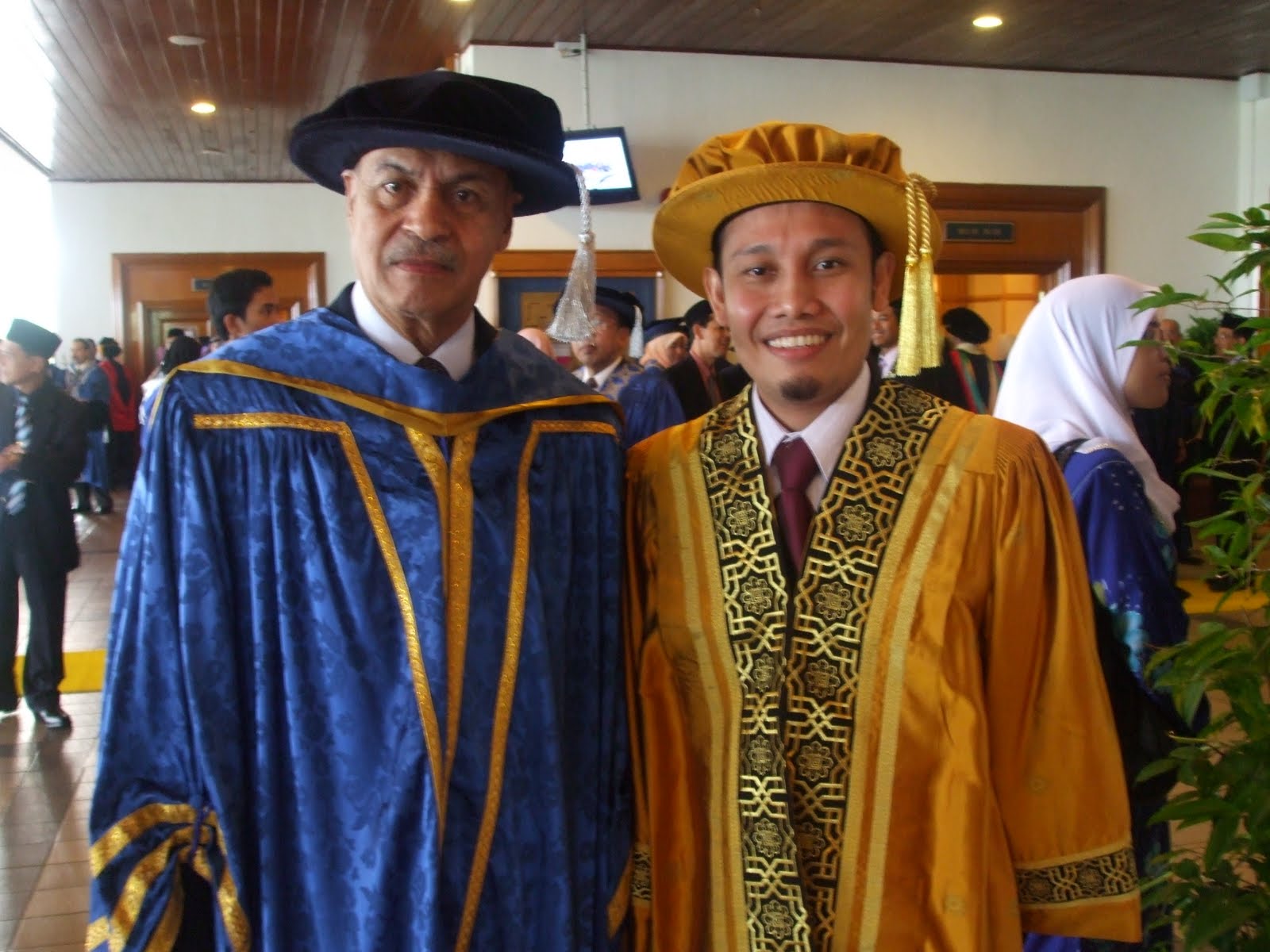
Convo UIA'08

Friday, April 13, 2012

Ph.D Tip: VIVA VOCE


Having completed and submitted the thesis, a candidate will then have to prepare for the viva session. A viva is basically an oral examination that is intended to ascertain that the contents of the thesis had actually resulted from the candidate's own effort. A panel of examiners will be appointed by the university. Normally there will be at least three members on the panel. The panel is chaired by a senior academic staff of the university. The chairperson is responsible for ensuring that the viva session complies with the rules and regulations of the university. The chairperson will also moderate the session in order to ensure fairness to the candidate. The other two members will be the external examiner and an internal examiner. The external examiner may be appointed from another university or even from the industry, while the internal examiner is appointed from the relevant faculties within the university. Both examiners are experts with qualifications and experiences that enable them to assess the PhD work submitted.

The viva may be conducted either as a closed or open session. In a close session, observers are not permitted to be in the room where the viva is conducted. In many universities, an exception is made, where the supervisor(s) are invited to attend the viva session, only as a silent observer. In an open session, members of the public, mainly from related industries and academics from within or other universities are invited to attend the session. At the discretion of the panel, observers may or may not pose questions to the candidate.

PREPARING FOR A VIVA SESSION

What does it mean when a candidate is invited to make a PhD defense, that is, to attend the viva session? Upon receiving the invitation to attend the viva session, a candidate can be certain of two things, first the supervisor(s) had approved that the thesis is worthy for the award of the degree being sought. Second, the examiners are in agreement with the supervisor(s). Knowing these two facts, the candidate should have the confidence to make the PhD defense. All that needs to be done now is to provide evidence that the thesis was the result of the candidate's own effort and that he/she fully understood what was done and what was reported in the thesis.

What should the candidate do to prepare for the viva session? The most logical thing to do is to master the content of the thesis and to retread some of the key literature upon which the PhD study was based on. At this point of time, this should not be a problem as no one else knows the thesis as wen as the candidate. What is more important now is to act the examiners.

How does a candidate go about doing this? The easiest way is to ask the supervisor(s) about the examiners' areas of expertise and interests. Though the university appoints the examiners, the appointments were based on the recommendations of the supervisor(s). Therefore in most cases, the supervisor(s) will be in position to advise the candidate on the examiners areas of expertise.

With such information, the candidate should look up recent articles published by the examiners and read them. Appreciate their work, go through their list of references and establish key references that influence the examiners work and thinking. The candidate should then compare his/her work against the thinking and approaches taken by the examiners. By doing so, the candidate will have a feeling of knowing the examiners and such feeling does help in discussion during the viva.

PRESENTATION DURING VIVA

It is almost certain that the candidate will be required to make a presentation on the work that had been submitted. It is impossible to make a thorough presentation, as the time for the presentation will not exceed 30 minutes. The presentation should be kept short and simple. A presentation comprising 20-25 slides that include the following heading will be sufficient:

(a) Introduction including the problem statement
(b) Objectives of the thesis and scope of work
(c) Literature review presented in the form of a chart that easily illustrates the gap of knowledge that the candidate is trying to fill
(d) Research methodology preferably in the form of a flowchart
(e) Major results, with minimum discussion
(f) Significant findings & conclusions.

In most cases, the candidate will not be interrupted during the presentation. Examiners will pose questions and seek clarification during discussion after the presentation.

DISCUSSION DURING VIVA

Discussions that follow the candidate's presentation can last anywhere between one to four hours. During the discussion the candidate must provide answers, offer clarifications, give opinions to the best of his/her ability. The candidate must confidently show that he/she was responsible in conducting the work and has a full understanding on why various procedures were adopted during the study. Whenever relevant, the candidate should make a Conscious effort in relating the PhD work being examined to the works of the examiners and of researchers they make references to. Such act will create a positive impact on the examiners.

DIFFICULTIES DURING VIVA

There will be occasions during viva that the candidate may face difficulties. A candidate should not panic or lose his/her temper during discussions in a viva.

Should there be questions posed by examiners that the candidate is not able to answer, he/she should be honest and say so. Examiners will posed many questions, failing to answer one or two questions will not lead them to fait a candidate.

If there are questions that fall outside the scope of the PhD study, the candidate should politely point this out and offer his/her opinion on the matter stressing that he/she has no data to back the opinion given.

Should there be points of argument that cannot be agreed upon, the diplomacy must be exercised. Ideally, disagreement must be allowed during the viva as long as the parties remain professional, should the situation becomes personal then the candidate should give way to allow for other points to be raised and discussed.

RESULT OF A VIVA SESSION

After the viva session, the candidate will be requested to leave the room while the panel deliberates on results. The wait will not be song, as the candidate will be informed of the results which fray be either one of the following:

(a) pass without correction.
(b) pass with minor corrections, usually a three month duration is given to the candidate to make the corrections.
(c) pass with major corrections, usually a duration of more than 6 months is given to the candidate. The corrections may require additional data to be collected. The candidate may also be required to re-sit for the viva when the correction is completed.
(d) reject, the work or the candidate did not meet the minimum requirement for the award of a PhD degree. However, it is very rare that a viva will result in the panel rejecting the thesis and the candidate's defense.

CONCLUDING REMARKS

Candidates will experience a feeling of relief and great satisfaction at the point when they are being congratulated by the examiners and supervisor(s). What does it mean? It means that now they will be conferred the PhD degree by the University Senate.

It is worth reminding that a PhD programme is designed to produce independent researchers. Therefore, a PhD degree is nothing more than a license, certifying that bearer of that degree is now capable of doing unsupervised research. He/she must now do more research to establish him/herself as an expert in a selected field. The PhD degree does not mark the end of a research study. It is actually the starting point for a career in research.

Wednesday, April 11, 2012

Message from My External Supervisor

Dreams Come True

Hi, Muhamad.

Today's message is more of a motivational one. I hope you're making steady progress.

"Dreams come true. Without that possibility, nature would not incite us to have them." ~~ John Updike

Remember, you began your graduate training with a dream and a goal. Your dreams can come true - you want them precisely because they are possible for you.

What dreams will be fulfilled once you complete the dissertation?

Best,
Dr. Rachna

(External Supervisor)

20203 Goshen Road #374
Gaithersburg, MD 20879, USA


Tuesday, April 3, 2012

Souvenir for my research respondents


Terimalah seadanya ek.. :)

Thanks to all 400++ respondents of my Phd research... may Allah Bless all of you... amin..

Sunday, March 25, 2012

Thesis Writing and Preparation for Viva - Voce


Thesis Writing and Preparation for Viva - Voce
By: Shuhaimi Abdul Talib & Junaidah Ariffin

This book provides simple guidance that can drastically improves the quality of a thesis. Examples extracted from thesis and research reports are presented throughout the book.

Friday, March 23, 2012

My Research Information : Malacca History


Why Bandar Melaka is called the World Heritage Site (Bandar Melaka Tapak Warisan Dunia)? It has it own identity and demonstrates the early period of this history background. The 15th-century Malay sultanate and Portuguese and Dutch periods beginning in the early 16th century are the originality signatures of this city. The town comprises with a unique art and culture, architectural and landscape of townscape without parallel anywhere in the world, particularly in East and Southeast Asia. 

Wednesday, March 14, 2012

Ph.D Tip: Dissertation is About Diligence

Assalamualaikum...

The dissertation is not really a test of our intelligence or capability. Instead, it is a means to strengthen and build upon our capacities for patience, perseverance, and diligence. This is a crucial distinction, because…

it's not about "Can you do this?"

It's really about "How can you do this?"

We can when we believe we can.

Take care, and see you next time!

Monday, March 12, 2012

ALL ONE NASYEED; FINALIS ANUGERAH NASYEED.COM


Jom Undi Finalis Anugerah Nasyeed.Com :: Kategori Nasyeed Sirah
Nasyeed : Bilal Bin Rabah | Munsyid : All One
Teruskan dengan undian sahabat2...:)

~Cara-cara untuk mengundi Finalis Anugerah Nasyeed.Com...
Jom tgk jom...:)
http://www.facebook.com/photo.php?v=402868086406456

Wednesday, March 7, 2012

Ph.D Tip: How to prepare for the oral defense of your thesis/dissertation

Topic: How to prepare for the oral defense of your thesis/dissertation

Use the following steps when preparing for the oral defense of your thesis/dissertation.

1. Evaluation of oral examination is based on your presentation and your answers to questions from the examining committee.

2. Be well prepared for your presentation - academically, mentally and physically. Try to be well rested and focused before your oral defense.

3. In your preparation, don't try to memorize all the studies cited in your thesis, but you do need to know the details of a few key studies, which form the basis of your investigation.

4. You need to be familiar with larger issues, such as the basic assumptions, theoretical framework, paradigm, cross-cultural perspectives, religious integration, etc.

5. More importantly, you need to have a deep understanding of the nature of your research problem and the major issues involved.

6. You may bring with you important materials for easy reference in the course of your defense; these may include key articles, computer print-outs of results, etc.

7. Your presentation is evaluated in terms of content and clarity as well as style.

8. Don't speak too fast and don't read from your notes.

9. Treat your presentation as a public address because there may be non-psychologists present at your defense. Therefore, don't use too many jargons and don't pack it with details. You need to tell people in simple, concise language: (a) What you did, (b) Why you did it, (c) How you did it, (d) What you found, and (e) What do the results mean.

10. Prepare power point presentation, hand-outs or power-points. Typically, they should include (a) An overview or outline of your presentation, (b) Introduction (including research question, rationale and hypothesis, if any, and definition of key constructs). (b) Method (including design, methodology, sample, instruments or questionnaires, and procedure. (c) Results (including tables or figures summarizing your findings) and (d) Discussion (including reasons for new or unexpected findings, contributions and limitations, and practical implications.)

11. Make sure that you space yourself well. Don't spend too much time on one section. For example, you should not spend more than 5 minutes on introduction, since you are allowed only 20 minutes for your presentation.

12. Most of the questions are rather general and broad, dealing with substantial methodological, theoretical and application issues. However, some questions focus on specific points regarding sampling, statistical analysis, or some questionable conclusions.

13. Be prepared to clarify or elaborate on your assumptions, theoretical positions, methods, and conclusions. Often an examiner plays the devil's advocate to see how well you can think on your feet and defend yourself.

14. Occasionally, an examiner may ask a question which is unfair or cannot be adequately answered. After a few futile attempts, feel free to say that you don't know the answer. You may even be bold enough to say, "Since none of my answers are acceptable, I would really appreciate it, if you could give me some pointers or tell me what would be a correct answer."

15. Here are some common questions: (a) If you were to do it all over again, what changes would you make? (b) What specific aspects of your findings can be utilized by counselors or psychologists in their practice? (c) What is the most important contribution of your thesis? Can you say it in one or two sentences? (d) What are some of the competing hypotheses? Could you think of an alternative interpretation of your findings?

16. Don't rush to any answers. It is perfectly acceptable to think for a couple of seconds, or ask if you are on the right track. If you are not clear about the question you are entitled to ask for clarification.

17. Try to be concise and to the point, but at the same time demonstrate that you have a good grasp of the complex issues involved. In other words, do not give superficial answers, but at the same time, do not go all over the map.

18. Put up a good defense without being defensive. Be confident without being cocky. A good defense means that you can provide strong logical arguments as well as empirical support to defend your position or conclusion. However, don't be defensive, when people criticize your study. If they are able to point out some real flaws or weaknesses in your study, accept their criticisms with humility, grace and gratitude.

19. Before the oral defense, talk to your advisor about areas of concerns based on external examiner's comments. Then, discuss with your advisor how to best address these concerns. (You advisor can not tell you the specific questions the examiners will ask, but he can direct your attention to issues or areas that require some thinking or additional research.)

20. After the oral defense, meet with your advisor for debriefing and seek advice on how to revise your thesis.

Originally excerpted from:

http://www.meaning.ca/archives/all_articles.htm#

Paul T. P. Wong, Ph.D., C.Psych.

Research Director, Graduate Program in Counselling Psychology Trinity Western University

Langley, BC, Canada

Popular Posts