PENGALAMAN & KERJAYA

MUHAMAD FAZIL HJ. AHMAD

Idola: Nabi Muhammad S.A.W

E-mail: islah_project@yahoo.com

3 Ogos 1979

Temerloh, Pahang


Education Background:

Doctorate - PhD. Communication - Branding (UPM) - 2013

Master in Communication - M.A.HSc. (Comm. UIA) - 2006

Bachelor in Comparative Religion and Communication (hons.) (UIA) – 2003


Career Background:

Senior Lecturer DS51 Faculty of Applied Social Sciences - UniSZA

Ahli Jawatankuasa Projek FRGS B-F1 “Branding Index”

Manager Student Activities and Alumni Department.

Manager Graduate Affairs Department, Kolej Islam Antarabangsa Malaysia

Tim. Dekan Pusat Bahasa Komunikasi, Kolej Islam Antarabangsa Malaysia

Kordinator Fakultas Komunikasi, Universitas Islam Antarabangsa Jakarta

Pensyarah Kolej Islam Antarabangsa Malaysia

Pensyarah Technology Park Malaysia College

Penasihat, Kelab Debat dan Komunikasi Kolej Islam Antarabangsa Malaysia

Penasihat, IIC Alumni Association

Pengarah Istiadat Convokesyen 2008-2010, IIC

Penceramah, Motivasi di Eastana Event & Consultancy

Penceramah, Sesi Kesihatan Jemaah Haji Masjid Wilayah KL

Penceramah, Sesi Kesihatan Jemaah Haji Masjid Al-Hasanah Bandar Baru Bangi

Penceramah, "Program Empower", East Coast Economic Region (ECER)

Penceramah, Pertubuhan Kemajuan Sosial Malaysia. ECER Hulu Terengganu

Pengacara Rancangan TV "Chef Halal" (2012)

Jurucakap Produk Kesihatan SayHeart Singapore (2011)

Jurucakap Produk KOFAZ (2009/2010) – All One

Ahli Kumpulan Nasyid All One

Calon bagi Anugerah Industri Muzik Ke-16 - All One

Calon bagi Anugerah Nasyeed.Com - All One


Research Projects:

(1) FRGS Project (BF1) (2010 – 2011) – “Developing a new branding index in corporate communication for an Asian country” (Research Assistant).

(2) Research (2009 -2012) – “Leveraging country's reputation and nation brand index in Bandar Melaka: Potential strategies for developing Malaysian’s city brand index”.

(3) Project (2010): “Measuring Determinant of City Brand for Institutionalizing Strategic Communication: A Study of Malacca City”.

(4) Ph.D Proposal Dissertation (2010): “Measuring Determinants of City Brand: Investigating the Antecedents of Perceived Brand Personality Scale in Bandar Melaka (Bandaraya Bersejarah)

(5) New Research Project (2013 - 2014) – “Identifying the Determinant Attributes of Halal Brands Index (HBI) that Influence the Corporate Marketing Communication (CMC) in Malaysian Market”.

(6) New Research Project (2014) – “The upcoming of innovation: Integrating Technology and Human personality”.


Conferences and Proceedings:

(1) Zakiah, M. Othman, I. & Ahmad, M.F. (2010). “Halal Business Corporate Social Responsibility”. International University Social Responsibility Conference & Exhibition - IUSRCE 2010, PWTC Kuala Lumpur, UTM Skudai, Johor, Malaysia.

(2) Ahmad, M.F. & Abdullah. Z (2011). “Measuring Determinants of City Brand: A Varification Approach in the Corporate Communication Perspective in Malacca City”. MENTION 2011, UKM Bangi. Selangor, Malaysia.

(3) Ahmad, M.F., Abdullah. Z., Ezhar Tamam & Jusang Bulong (2012). “City Brand: An Application of Brand Personality Scale to Bandar Melaka”. 21st AMIC Annual Conference 2012, Concorde Hotel, Shah Alam, UiTM Shah Alam, Selangor, Malaysia.

(4) Ahmad, M.F., (2013). “The Stakeholder Interpretation of City Brand Personality Determinant for Strategic Communication”. Seminar Hasil Peyelidikan, Kementerian Pengajian Tinggi 2013 - Sains Sosial dan Kemanusiaan, 2 & 3 July 2013 at EDC Hotel, Universiti Utara Malaysia, UUM Sintok, Kedah, Malaysia.

(5) Ahmad, M.F., (2013). “The Antecedents of Halal Brand Personality in Malaysian Takaful Industry: A Preliminary Review”. 1st Insurance and Takaful International Symposium. 7th - 8th October 2013 at Puri Pujangga UKM Bangi, Selangor, Malaysia.

(6) Ahmad, M.F., (2013). “CSR implementation in Islamic Philanthropy: A Preliminary Review of Halal Brand Personality Concept in Malaysian Takaful Industry”. World Universities Islamic Philanthropy Conference 2013. 4th – 5th December 2013 at Menara Bank Islam, Kuala Lumpur, UiTM Shah Alam, Selangor, Malaysia.

(7) Ahmad, M.F., (2013). “The Issues of Future Innovation: Integrating Technology and Human Personality for Reputation Management”. 2nd International Management Conference 2013 IMaC'2013. 14th – 15th December 2013 at Taman Tamadun Islam, Kuala Terengganu, Terengganu, Malaysia, UniSZA Kuala Terengganu, Terengganu, Malaysia.

(8) Ahmad, M.F., (2013). “The Role of Halal Brand Personality Determinant in Malaysian Takaful Industry”. 2nd International Management Conference 2013 IMaC'2013. 14th – 15th December 2013 at Taman Tamadun Islam, Kuala Terengganu, Terengganu, Malaysia, UniSZA Kuala Terengganu, Terengganu, Malaysia.

(9) Ahmad, M.F., (2013). Halalan Taiyyban: The Application of Brand Personality in Malaysian Food Industry”. International Conference on Halal Global 2013. 15th – 16th December 2013 at Perdana Hotel, Kota Bharu Kelantan, UiTM Machang, Kelantan, Malaysia.


Publications:

(1) Ahmad, M.F. (2006). Communication Technology and Organizational Performance: An Analysis of The IIUM Community’s Web Sites Usage and Perceptions. Research in Master Thesis IIUM Library. IIUM.

(2) Ahmad, M.F., Abdullah. Z, Tamam. E & Bolong. J., (2013). Determinant Attributes of City Brand Personality That Influence Strategic Communication. Canadian Social Science. Canadian Academy of Oriental and Occidental Culture. Vol. 9 No.2.

(3) Ahmad, M.F., Abdullah. Z, Tamam. E & Bolong. J., (2013). An Application of Brand Personality to City Brand for Strategic Communication. International Journal of Social Science Tomorrow. Society for Promoting International. Vol. 2 No.5.

(4) Ahmad, M.F., Abdullah. Z, Tamam. E & Bolong. J., (2013). Involving Internal Stakeholders in Developing City Brand Personality for Strategic Communication. Asian Social Science. Vol. 9 No.10.


Editorial Board Members:

(1) Editorial Board Members for the Journal of Basic and Applied Scientific Research – [ISI-Thomson] (13th November 2013), International Society Applied Sciences, Cairo, Egypt & United States of America (USA). - Global Impact Factor = 0.432


Invitation to Paper Review:

(1) Reviewer for the Journal of Place Management and Development – [Emerald insight Journal] (10th September 2013), Institute of Place Management, 1 Queen Anne's Gate, Westminster, London.


My Inspiration:

“The comprehensive excellence achievement is balancing of our life journey”

-Fazil, 2009-


“The requirement of comprehensive excellence achieved is balancing of our life journey” -Fazil, 2009-

TEACHING SPECIALIZATION:

1) Public Relations

2) Corporate Communication

3) Advertising

4) Branding & Reputation

5) Crisis Communication

6) Public Opinion & Propaganda

7) Islamic Studies

8) Moral Studies

9) English Language


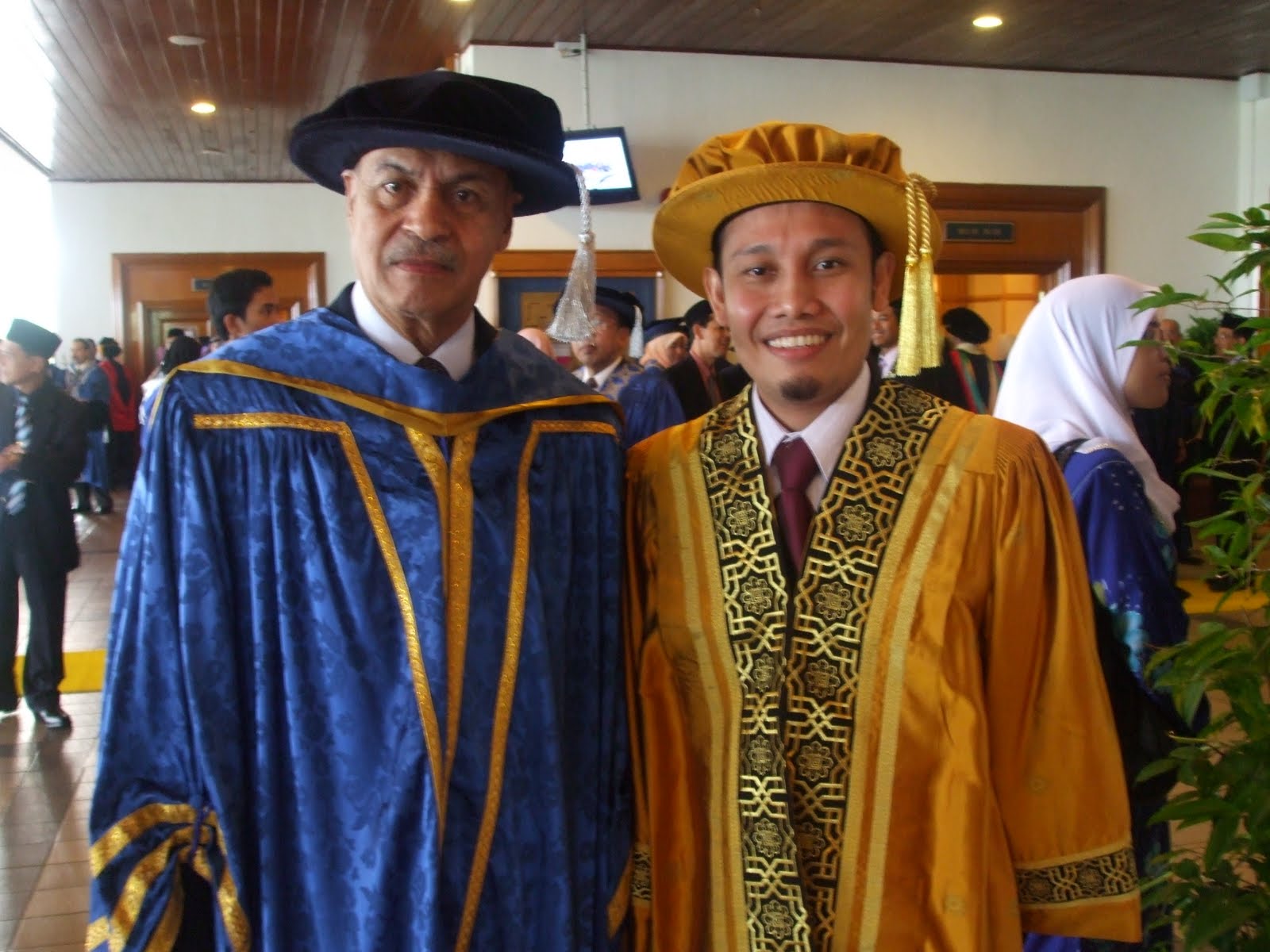
Convo UIA'08

Tuesday, October 4, 2011

INTERNATIONAL CONFERENCE ON MEDIA AND COMMUNICATION (MENTION2011) 11 - 12 OCTOBER 2011 @ EQUATORIAL BANGI-PUTRAJAYA


INTERNATIONAL CONFERENCE ON MEDIA AND COMMUNICATION (MENTION2011)
11 - 12 OCTOBER 2011 @ EQUATORIAL BANGI-PUTRAJAYA
Ph.D Tip: Try Something New

Don't be afraid to try something new. It's so easy to get caught up in a certain way of approaching the dissertation, and closing off other options or other possibilities. While you do need to narrow your focus to complete the project, stay open and flexible about different ways to accomplish this.

For instance, be open to asking for help or paying people to help you (like with data entry, editing, formatting, for example). Stay open to working in new environments (at a coffee shop, in a writing group, out on the deck in nice weather), and stay open toworking at different times of the day (you might work well in the morning for a while, but then find you get inspired in the evenings).

The dissertation process can be long, and therefore requires some infusion of new working styles, new working environments, and new working hours, at least every now and then. Stay open to the possibility that making changes could make the dissertation process easier and more fun.

Sunday, October 2, 2011

Ph.D Tip: Complete Another Small Task First

"It is easy for me to get stuck at phases of my work that are least structured -- at the beginning of identifying a topic or defining a lit review, or (like now) with reams of interview data in front of me. One thing that works is to complete another task that can be easily accomplished in a short amount of time (say an hour or less). This might be updating the monthly program on the website that I run, or planning an exercise for class. By accomplishing something that is tangible and immediate, I get past my inertia and can USUALLY transfer that energy to the dissertation."

Monday, September 5, 2011

You Might be a Graduate Student If...

You just might be a graduate student if...

  • you can analyze the significance of appliances you cannot operate.
  • your office is better decorated than your apartment.
  • you have ever, as a folklore project, attempted to track the progress of your own joke across the Internet.
  • you are startled to meet people who neither need nor want to read.
  • you have ever brought a scholarly article to a bar.
  • you rate coffee shops by the availability of outlets for your laptop.
  • everything reminds you of something in your discipline.
  • you have ever discussed academic matters at a sporting event.
  • you have ever spent more than RM50 on photocopying while researching a single paper.
  • there is a microfilm reader in the library that you consider "yours."
  • you actually have a preference between microfilm and microfiche.
  • you can tell the time of day by looking at the traffic flow at the library.
  • you look forward to summers because you're more productive without the distraction of classes.
  • you regard ibuprofen as a vitamin.
  • you consider all papers to be works in progress.
  • professors don't really care when you turn in work anymore.
  • you find the bibliographies of books more interesting than the actual text.
  • you have given up trying to keep your books organized and are now just trying to keep them all in the same general area.
  • you have accepted guilt as an inherent feature of relaxation.
  • you reflexively start analyzing those Greek letters before you realize that it's a sorority sweatshirt, not an equation.
  • you find yourself explaining to children that you are in "20th grade".
  • you start referring to stories like "Snow White et al."
  • you frequently wonder how long you can live on pasta without getting scurvy.
  • you look forward to taking some time off to do laundry.
  • you have more photocopy cards than credit cards.
  • you wonder if APA style allows you to cite talking to yourself as "personal communication."

Thursday, August 25, 2011

Ph.D Tip: Getting Down to the Writing

Writing the dissertation requires preparation - of both the content and the writer. You must gather your ideas together, organize them, and be able to transfer your multidimensional intimacy with your topic to the one-dimensional framework of the computer screen or pad of paper. This is often one of the most difficult transitions to make, for you must first build up a structure and then tear it down and separate it into parts to make it fit the prescribed structure of an acceptable dissertation. Most graduate students are synthetic thinkers; that is, they are prone to thinking about the big picture. They love to roll ideas around and find all sorts of connections and combinations and links within the seemingly limitless realm of thinking. Generally, it is neither as interesting nor as easy to transfer the unlimited potential of your thoughts to the realm of words on paper.

When you are preparing to write a chapter or section of the dissertation, there are certain processes that can make it easier to begin and keep working:

1) Follow your own style - it's worked so far. Follow your own natural style of organizing information, within reason. Your usual style of reading, studying, and integrating information has served you well up to this point in your academic career. Now, in the home stretch, is not the time to radically change your organizing and writing style. Use what works for you and stay focused on completing this project as quickly as possible. Some graduate students view the dissertation as the time to rid themselves of all their bad work habits to finally reach the exalted place they've always aspired to be.

Allow me to suggest that you save the self-exaltation for after you obtain your Ph.D.

Until you have been awarded your degree, stay with what has worked well for you in the past. If you read best in bed at night, by all means keep doing that. If you write best first thing in the morning, keep doing that. If you like to have the radio on while you're piecing out a complex train of thought, leave it on. The dissertation is the time to keep on using what has worked for you so far. It's not the time to try to change yourself drastically

2) Get rid of negative feelings before you write. It's crucial that you've attended to any negative feelings and gotten them out of your way before sitting down to write. If you are feeling tired, depressed, angry, anxious, or upset- DO something to alleviate these feelings first so you can then have a more successful writing experience. One technique that I use quite often is to write a journal entry for about ten to fifteen minutes before starting to write. I find that this helps me dump out all my thoughts, worries, and mental wanderings, clearing my mind so there is space to focus on the writing task at hand.

3) Take time to review your notes before you start. In preparing to write, it is a good idea to take some time to review your notes and what you are planning to say. I suggest doing this for about fifteen to twenty minutes before your official writing time. If you work in the morning, for example, you might sit at your desk at 8:35 a.m. and read over your notes until 9 a.m. Then you'd start your official writing time, which might last until 9:30 a.m. After this, you might take a break for a few minutes, walk around, stretch, and then precede your next writing burst with a brief period of reading and reflection. When you are first sitting down to write, schedule shorter writing periods especially if you find writing to be difficult) and gradually work up from there. Remember, more hours spent in front of the computer do not automatically make the finished product better. If you can get a focused block of writing time and use it well, you can accomplish a great deal in smaller blocks of writing time, even fifteen to thirty minutes.

The longer you sit at the computer without writing, the more likely it is that your internal critic is censoring you. The more your critic censors you, the more difficult you'll find it to write. So if you're having problems finding the right words or nothing is coming out, shift your focus for a few minutes and then try again. There is nothing to be gained in focusing on how you should be writing something when you know you're not.

4) Start with what you know. Try starting with the section or idea with which you feel most comfortable. In every writing session, aim to draft at least half a page, no matter how terrible that half page might be. There is value in writing for the sake of writing, especially at first, and you might create nuggets that can be expanded in later sections.

5) Stay focused on what you've planned to work on. When you begin writing, stay focused on the section or chapter you're working on, and try not to get derailed by too many thoughts about random ideas. Having too many good ideas about the parts of the dissertation you're not currently working on might be an avoidance technique. You might want to keep a note pad by your computer so you can jot down your ideas and file them away for use later. Unless you are absolutely compelled to switch focus and move to a new topic or section, try to adhere to your original plan. Inspiration does strike, and should be welcomed. But overall, the main progress of the dissertation will often be more plodding and methodical.

6) Use visual aids and outlines to assist your writing.

Make use of your visual aids to assist in writing. If you made a Mind Map or outline of your section, go back and fill in as many details as possible. Refer to this map or outline periodically and aim to end each writing session by reaching a defined goal. The clearer you are about where you're going, the easier it will be to know when you've reached there.

7) When you're writing, just write.

I find that when I get into the writing zone, the words keep coming out of me and they flow easily. When I start to edit and revise in mid-sentence, the writing zone quickly disappears and is difficult to find again. I must stress that when you are writing, write! Aim to write as much as you can as fast as you can. When you are editing, edit! Do this carefully and thoughtfully. You will know the difference because the writing will flow more easily and you will be almost continuously typing when you are writing, *just* writing. When you are editing your writing as you write it, your time at the computer or desk will be marked by long pauses; little output; and a growing feeling of anxiety, worry, and, sometimes even dread. Remember: you cannot write quickly and edit at the same time. Writing and editing should be considered to be mutually exclusive for your purposes. Create a psychological or emotional writing space that allows you to explore your ideas without feeling they always have to lead to perfect, well-defined end points. If you have read enough and prepared an outline or map for your writing, sometimes you just need to step aside and allow the writing to come. The writing is not going to show up when your internal critic is judging every word you type. Writing is a creative process, and creation is often messy. The more you can allow the writing to be messy, the faster you will move to the place of a more refined product.

8) Leave your last sentence unfinished. Leave your last sentence unfinished so you can more easily pick up in mid-thought when you next return to writing. Most ABDs find it much more daunting to start on a new page or with a new paragraph compared to finishing up one they had already been working on. Each time you sit down to write, aim to work for at least ten to fifteen minutes at a time. If you think this doesn't sound like much time, you're right. But if you write - *just* write for the whole ten to fifteen minutes, you can easily write a page or more within that time frame. Then you can go out and do other things.

Remember, the dissertation is just a long paper. The more you can chip away at it by writing a little each day, the sooner you will get to the finish line.

9) Think less and write more. Rather than taking up all the valuable real estate in your very expensive brain by charting out the perfect pathway to a perfect dissertation that may never get written, why not do a bit more and think a bit less? When you're writing the dissertation, your main goal should be to fill as many pages with as good quality writing as you can, as quickly as you can. If you can't write fast and well, then at least write fast. Writing fast often turns out better than we expect, anyway. If you have taken the steps to outline your thoughts and you have read enough on the topic, the only goal you should have is to get as much of your knowledge out onto the screen or paper as quickly as you can.

10) The first draft need not be a masterpiece. Remember, the dissertation is not a masterpiece in the first draft. And it's not a work of pure fiction (we hope), so you don't have to worry about snazzy plot lines, intriguing climaxes, or the ideal amount of tension between your characters. Since the dissertation is a piece of formal academic writing, you will need to follow the style and form of this genre, and this rarely requires the amount of pre-thought that most ABDs put into it. The first chapters of the dissertation are the most difficult to write because you are becoming accustomed to a more scholarly style of writing. Once you have the basic format defined, you will want to use a similar template for each of your subsequent chapters. And one last thing: remember that a small amount of consistent discipline and regular focus will get this project completed faster than anything else. Your dissertation process does not have to be painful to be meaningful. Now, get down to writing, and good luck!

Ph.D Tip: Time Management is Crucial

Time management is one of the most important aspects of the dissertation process. The best time management happens when your time is spent in those activities which have the highest value or significance for you. How many times have you heard someone say that "such and such" is important to them, but they never actually get around to "such and such"?

I hear this often in people who are working on their dissertations, too. They say the dissertation is important, but they never quite get around to actually working on it. They prepare to work on it. Talk about working on it. But never actually work on it.

In the dissertation process, talk is cheap. (Excuse the bluntness). You're either on target to finish, or you're not.

As Yoda said, "Do or do not do. There is no try."

While I don't 100% agree with this (because sometimes effort is important, even if not much always gets accomplished), I do think that there is a point where trying has to become doing, or you'll never finish.

Abstract for MENTION UKM 2011

Measuring Determinants of City Brand: A Verification Approach in the Corporate Communication Perspective in Malacca City

By: Muhamad Fazil Ahmad

GS24111

Abstract

Purpose: The purpose of study is to measure the practicality and application measures on city brand in the context of the corporate communication’s strategic management, based on Aaker’s well-known conceptual framework of brand personality.

Design/methodology/approach: The study employs structural equation modelling to investigate the causal relationships between the dimensions of city brand determinants and city brand itself. In-depth interviews and questionnaire survey on measuring the determinants of city brand employs to examine the respondents’ perceptions of the dimensions of city brand affected the overall city brand evaluations. Data collects from the opinion leaders, communication managers and executive officers in Malacca City.

Findings: Expected key findings of this study include discovering the most influential dimension of city brand and contributing to the city brand determinants index in the sense of extending and proposing city branding index as represent as alternative measurement to the existing subjective survey-based measurement indexes branding strategies for corporate communication in the future.

Practical implications: Implications for opinion leaders, communication managers and executive officers will be discussed. They should consider the relative importance of brand dimensions in their overall city brand evaluations.

Originality/value: City brand plays a pivotal role in contemporary corporate communication strategy, and is the subject of much literature, both professional and academic. This study considers as a major contribution to the body of knowledge.

Keywords: City Branding, City Brand Index, Corporate Communication Strategy, Malacca City

Saturday, July 16, 2011

Ph.D Tip: Set Strong Boundaries

Our PhD tip for this week involves setting strong boundaries around our dissertation time. Hold it as an important appointment (because it is). The people who finish most quickly are those who set aside time to work on the dissertation regularly, and then actually do it.

If we haven't been making much progress lately, start by setting aside fixed times to work on your dissertation. The earlier in the day, the better (kind of like exercising). Decide, ahead of time, what we will seek to accomplish in this allotted time. Then show up, and do it.

Repeat at least 5 days a week, and we'll have a finished dissertation in short order.

Saturday, July 9, 2011

Bangkel Structure Equation Modeling (SEM)

Tarikh : 11-13 Julai 2011 (Isnin hingga Rabu)
Masa : 8.00 pagi - 5 petang
Tempat : Makmal Kewartawanan, FBMK, UPM.

Ph.D Tip: Don't Be Afraid to Ask for Help

Time for another dissertation tip.

Today's tip has to do with asking for help. So many ABD's lose so much time in their dissertation process because they don't ask for help when they need it.

How do you know you need help? When you feel overwhelmed, unfocused, or distracted about the dissertation. When you dread working on it, or find yourself procrastinating to avoid working on it. When you have a crucial step that must be taken in order to move ahead, but you're just not taking that step.

For example, if you need to get data entered or transcribed, and you find yourself procrastinating on doing this, you probably want to ask for help. Even though it might seem strange, pay someone to enter your data so you can get moving again. You can move on to data analysis until your data is entered. Similarly, if you're putting off revisions or formatting, pay someone to do this for you.

Not everything has to be done by you, alone.

Until next time...

Tuesday, June 14, 2011

Ph.D. Comprehensive Examination

Department of Communication
University Putra Malaysia
Ph.D. Comprehensive Examination
Name of candidate:
Muhamad Fazil Bin Ahmad
Date:
13th June 2011
Examiners :
Dr. Zulhamri Abdullah
Assoc. Prof. Dr. Ezhar Tamam
Dr. Jusang Bolong
Instructions :
  1. Candidate picks up the examination questions from the chairman of supervisory committee on the morning of 13th June 2011.
  2. Candidate is given one week to answer all questions. It is a take home examination.
  3. All answers must be typed using computer, double-spaced on one side of the paper and using font size 12 point. Answer each question separately and type the question on top the front page of each answer script. Number the answer pages accordingly.
  4. The length of answer for each question is about 12 – 15 pages.
  5. References cited should be listed at the end of the respective answer script. The references used should be as current as possible.
  6. Submit three (3) bound copies of your answer script to the chairman of the supervisory committee by 12:00 noon on 20th June 2011. On the front page or cover, write your name, matric number, name of examiners, and examination date.
  7. An oral examination will be conducted after all examiners had read and evaluated the answer scripts.
  8. Candidate may consult the respective lecturer who prepared the question for clarification.
  9. The examination result will be disqualified if element of plagiarism is found in the answer script.
Duration of CE : 13th – 20th June 2011 (8 Days Only)
Question 1: Communication/related Theory
Question 2: Research Methods
Question 3: Statistics
Question 4: Domain of Thesis Studied

Instructions:
1. There are FOUR (4) questions in this part.
2. Answer ALL questions.
Question 1: Communication/related Theory [10 marks]
1. The Public Relations Division of International Communication association is now seeking nominations for the best theory on corporate communication. Which theory would you nominate and accordingly provide justifications of your choice?
Question 2: Research Methods [10 marks]
2a. What do you understand by key points, “conceptualization” and “operationalization”?
2b. Considering the possible relationship between CSR initiatives and corporate reputation, describe how that relationship might be examined (a) deductive and (b) inductive methods.
Question 3: Statistics [10 marks]
3. Please give your critique on statistical procedures used by the researchers in the accompanying journal article. Support your critique with some reference, why the researchers used that the statistical procedures for their research. Finally, please indicate another possible research objective(s) and statistical procedure(s) would be your suggestion to the researchers to improve their finding. Why?
Source of journal article
Wan, Hua-Hsin and Schell, Robert (2007). Reassessing Corporate Image—An Examination of How Image Bridges Symbolic Relationships With Behavioral Relationships, Journal of Public Relations Research, 19: 1, 25 — 45
Question 4: Domain of Thesis Studied [20 marks]
4a. How would you describe the differences between related constructs such as corporate image, corporate identity and corporate reputation of the organization?
4b. What are possible theoretical practical implication of city branding as discussed in the article below? Why does brand personality concepts are used to study branding places? Do you agree that there are similarities between brand personality and brand positioning with regards to place branding?
Source of journal article
Melike Demirbag Kaplan, Oznur Yurt, Burcu Guneri, and Kemal Kurtulus. (2010). Branding places: applying brand: personality concept to cities. European Journal of Marketing Vol. 44 No. 9/10, 2010 pp. 1286-1304 .


Wednesday, June 8, 2011

Ph.D Tip: Take Big Actions Once Per Month

Dear Muhamad,

Hey, it's good to be with you again. How is the dissertation progress going?

Today's tip has to do with taking big action on your dissertation.

While, generally, I tend to favor small steps, consistently taken, there are times in the process where you won't be able to accomplish very much in small blocks of time. You'll need to set aside a larger chunk of time in order to accomplish something
significant.

My recommendations for doing this would be to try and set aside a day once a month or once every two months in which you have several hours to devote to your dissertation. Plan that into your schedule for the next six months. Guard this time as you would any other important appointment.

Plan ahead of time what you'll work on during this period, and start early in the day. Use this block of time wisely, and you could make enough significant progress on the dissertation to motivate you to keep going. When you commit to your project in terms of time and energy, you will be more likely to see it through.

Dr. Rachna Jain

Friday, May 27, 2011

Dissertation Writing as an Endurance Sport

Hi, Muhamad!

Wow! What a week! Things have been wildly busy around here. I hope you're doing well and are happy with your dissertation progress.

Here's another thoughtful dissertating article for you!

Hope this will give you an extra boost of endurance. Keep moving.

Take care, and see you next time!
Dr.Rachna
(Muhamad's Phd. external supervisor)

Dissertation Writing as an Endurance Sport
by Michael Kelly
Ph.D. Candidate
Writing a dissertation and training for an Ironman triathlon don't seem to have a lot in common. For one thing, triathletes (both male and female) tend to shave most of their body hair in an effort to save time, whereas graduate students (both male and female) tend NOT to shave in an effort to save time.

Truth be told, both pursuits have much more in common than most people would think. And keep in mind that as a triathlete, I'm neither fast, nor good, nor particularly talented. I'm slow but stubborn, which is a useful trait in dissertation writing as well.
So, what characteristics do dissertation writing and Ironman training and racing share?

Coffee ... lots of coffee. There's just no way around it -- riding a bike or reading academic books and articles for six hours at a time enslaves you to "the bean".

We Sleep When We Die. This may be a chicken-or-egg relationship with #1, but both dissertation writing and endurance training require you to adapt to less sleep than your body needs. Should you get 8 or 9 hours? Sure. Do you get 4 or 5? Usually there just aren't enough hours in the day to do everything you need to do.

The Fogie Factor. Aren't you tired of hearing your advisors tell you about how they had to run their data by submitting punch cards to lab-coated computer attendants, or that when THEY took their comprehensive exams they had to write it longhand with dull pencils, or that THEIR advisor made them (blah, blah, blah).

Triathlon's the same way -- there's always some fogie telling you about how he had to ride a 45 pound Sears 10 speed in jean shorts and tennis shoes up Torrey Pines Road, or the time that it was 117 degrees and (blah, blah, blah). Guess what? The new technology doesn't make it any easier -- your brain still needs to come up
with an original thesis and analysis that you have to sustain for several years and several hundred pages, and your body still has to propel you through 2.4 miles of swimming, 112 miles of cycling and 26.2 miles of running. No amount of technology can blunt the fact that these are Very Hard Things.

Talent Is Overrated. Any TV coverage you've seen of Ironman completely overplays the stumbling, the vomiting, the grimacing ... the truth of racing and training is much more mundane, and most of it is mental -- you keep yourself going out of stubbornness, and if your body tries to quit, your mind needs to do some serious smackdown to quell the corporeal rebellion. Same thing with dissertation writing -- yes, your brilliance helped create that inspired flash of insight that lies at the heart
of your thesis, but the rest of your dissertation gets written through sheer will as you spend a few years of your life drawing together the evidence and arguments into a book-length project.

What gets you through in both cases is not any particular talent, but a willingness to keep plugging away until you're done.

Most people just don't get it. Let's face it -- for most people, getting a Ph.D. is not the most rational way to spend 4-6 years of their lives.
You've gotten tired of explaining to the relatives at the holidays that you're still in school and that you're still working on "that really big paper," and you've given up trying to explain why you find your dissertation's topic so interesting. Training for an
Ironman leads to similar reactions from friends and family: "You're doing what? For how long? In one day?" Most triathletes have given up trying to explain the allure of 10-17 hours of self-propelled motion to uncomprehending loved ones.
In both cases, you're trying to explain the unexplainable. Though it's hard to remember when you've been focusing on the same narrow topic for three years or when you've been sitting on the same narrow bike seat for three hours, you started with an internal spark of some kind, a burning curiosity about what's out there and what's possible, and about whether or not you could do it. In both cases the underlying reasons tend to be intensely personal and hard to explain, which makes it all immensely satisfying in ways that are impossible to verbalize to "outsiders."

Where Does It End? In both Ironman racing and in dissertation writing, everyone hits at least one wall where they say (scream) to themselves "I AM NEVER GOING TO FINISH THIS THING!" Finishing seems so far away, and what you need to do to get there looks so inconceivably huge that it seems utterly unattainable. It makes you
doubt yourself intensely, but in both cases you need to remember that this feeling happens to everyone and does NOT indicate your unworthiness. It's universal.

What you have to do instead is focus intensely on whatever small task you're involved in at the moment -- whether that be pedaling to the top of the next hill or editing your first two chapters -- and forget (as much as you can) the Big Picture with all the fear
and loathing that comes with thinking about it.

You string together enough of those little jobs and you finish -- it's that simple.

I could go on and tell you about how both triathletes and graduate students survive on pasta to a degree that would disgust any Atkins adherents they know, or how they tend to make passersby nervous by frequently talking to themselves out loud, but I think you get the point.

Dissertation writing IS an endurance sport, and like all endurance sports it demands (and rewards) those who can give a steady, measured effort.

Michael Kelly is a Ph.D. candidate in the Political Science
Department and a Research Fellow at the Brookings Institution in
Washington, D.C., which is a MUCH colder place to run this time
of year than La Jolla.

Friday, May 6, 2011

How to Organize Your Bibliography

I know of a fantastic research/organization tool and thought it would be perfect to share with you!

Have you ever stopped by http://www.endnote.com ? This is a great resource for keeping track of all of your bibliographic material. You just type in the citation once,
and you have it ready to use from there on. Endnote also can generate a bibliography for you, which is great for the last minute deadline on printing the final copy and
getting it ready to turn in.

If you know that you need to get your bibliographic material organized, definitely check out Endnote. It can save you time and money. Also, be sure to check if they still offer a student discount. [No sense in spending more than you have to, right?]

Be sure to find out if they have a trial version so you can try before you buy.

If you know you don't like Endnote, but are still looking for another bibliographic resource? Check out Procite.

Sunday, May 1, 2011

Avoid "all or nothing"

Avoid "all or nothing" or "black/white" thinking about your dissertation.

"My dissertation will never be done if I don't spend 18 hours a day on it." "I have to read EVERYTHING ever written so this is good enough." No statement that has the words: "always", "never", "should", "ever" can possibly be true - these are good "watchwords" for all or nothing type thinking.

Remember- in the dissertation, as in life- if you aren't feeling good about what you're doing, it may mean that you're thinking the wrong way.

Popular Posts